Multi-Agent Memory Architecture: Patterns for 2026
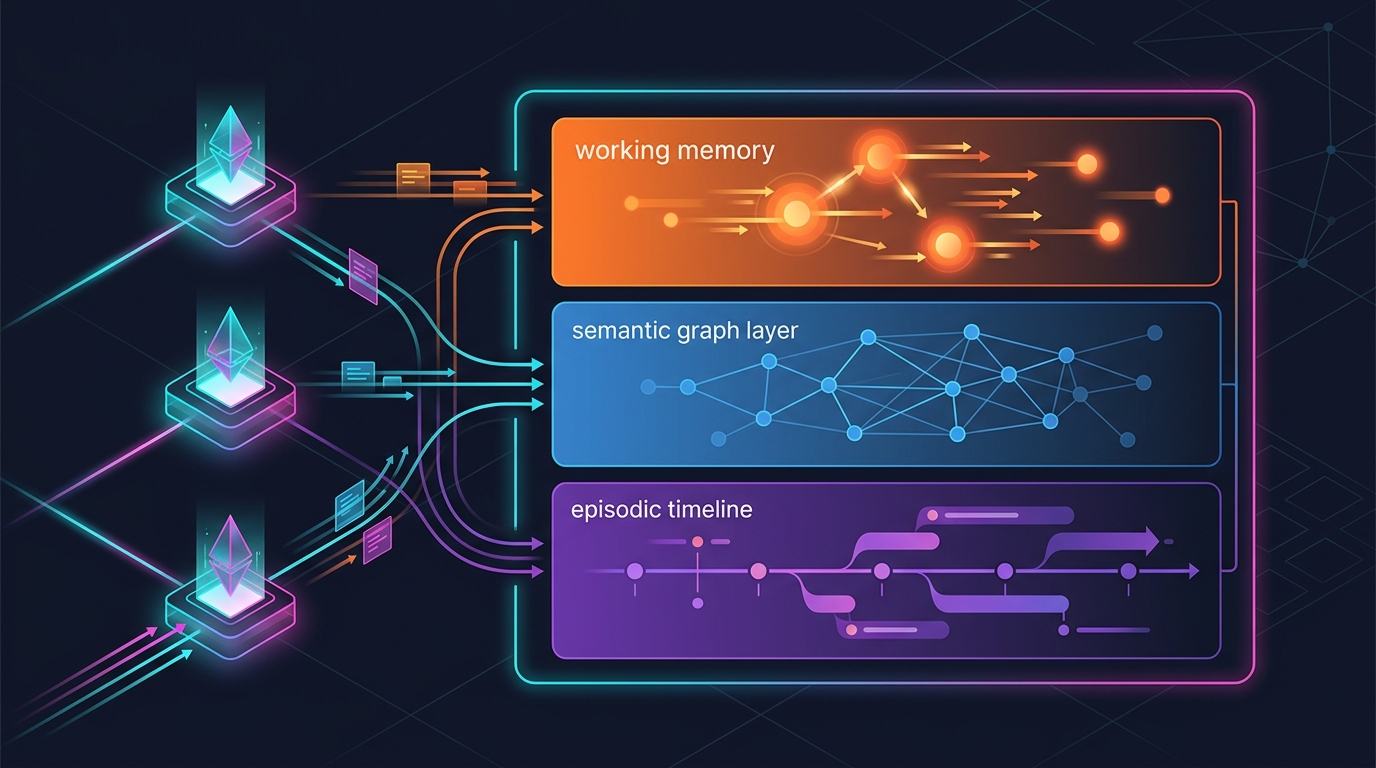
Shared, isolated, or hierarchical? We break down the three memory architectures production multi-agent systems use — with benchmarks, code patterns, and the tradeoffs nobody talks about.
Memory is the defining architectural challenge for multi-agent AI systems.
Single-agent memory has a clean answer: store in a vector database or graph, retrieve relevant context, inject before generation. The moment you add a second agent, everything breaks. Now you need coordination, consistency, isolation, and conflict resolution. Gartner documented a 1,445% surge in multi-agent system inquiries from early 2024 to mid-2025, and while Anthropic’s evaluations show properly architected multi-agent systems outperform single-agent setups by over 90% on research tasks, 41-87% of multi-agent LLM systems still fail in production — with 79% of root causes in coordination rather than technical bugs.
The memory architecture you choose determines whether agents compound knowledge or drown in noise.
This post maps the three production patterns we’ve seen across teams building with LangGraph, CrewAI, and specialized memory layers. We include concrete implementation patterns, benchmark results from LoCoMo and LongMemEval, and a candid take on which pattern fits which workload.
The Three-Layer Memory Taxonomy
Before discussing how agents share memory, we need to agree on what memory is. The cognitive science taxonomy — adopted with surprising fidelity across agent frameworks — distinguishes three types:
Episodic memory stores specific past events: conversation turns, tool-call traces, interaction sequences. The key property is temporal ordering. When did the user last say they needed the report? What tool failed on the first attempt, and how was it resolved? Letta implements this as a searchable PostgreSQL log, pageable into context on demand. Zep’s Graphiti engine goes further — it stores episodic subgraphs with explicit bitemporal annotations: event time (when the fact was true in the world) and ingestion time (when the agent observed it). This enables precise reasoning over retroactive updates — if a user changes their address, the system tracks both the old and new facts without losing either.
Semantic memory holds declarative facts and relationships: user preferences, entity properties, domain knowledge. Unlike episodic memory, it’s atemporal — it represents what the agent currently believes to be true. Mem0 has become the most widely deployed semantic memory layer, with approximately 48,000 GitHub stars and $24M raised in October 2025. It extracts named entities and relationships from conversations via an LLM pipeline, stores them in a graph database, and cross-links them to vector embeddings for fuzzy retrieval.
Procedural memory captures learned processes: “How did we resolve this ticket type? What tool combination worked for this task?” This is the least mature layer in current frameworks. Most teams implement it as curated example libraries or fine-tuned models. The MAGMA architecture stores procedural patterns in a dedicated event subgraph and uses cross-graph traversal to retrieve relevant past solutions — it scored 0.7 on LoCoMo’s judge metric, leading all tested systems as of early 2026.
Pattern 1: Shared Memory
graph LR
    A[Agent A] -->|read/write| SM[(Shared Memory)]
    B[Agent B] -->|read/write| SM
    C[Agent C] -->|read/write| SM
    SM -->|full visibility| A
    SM -->|full visibility| B
    SM -->|full visibility| C
In shared-state systems, all agents read from and write to a common memory store. This is the simplest model and the default in most frameworks.
LangGraph uses a centralized state object passed between nodes. OpenAI’s Swarm pattern uses shared context variables. CrewAI provides crew-level memory stores.
from langgraph.graph import StateGraph, MessagesState

# Shared memory across all agents via LangGraph state
class SharedAgentState(MessagesState):
    shared_facts: list[str]  # All agents can read/write
    current_assignee: str
    task_status: str

graph = StateGraph(SharedAgentState)

# Research agent writes findings to shared state
async def research_agent(state: SharedAgentState) -> dict:
    findings = await gather_research(state["messages"])
    new_facts = extract_facts(findings)
    return {"shared_facts": state.get("shared_facts", []) + new_facts}

# Writing agent reads from shared state
async def writing_agent(state: SharedAgentState) -> dict:
    context = "\n".join(state.get("shared_facts", []))
    draft = await generate_draft(state["messages"], context)
    return {"messages": draft}

graph.add_node("research", research_agent)
graph.add_node("writing", writing_agent)
graph.add_edge("research", "writing")
When shared memory works: Small teams (2-5 agents), pipeline architectures with sequential processing, tasks where every agent genuinely needs full context.
When it breaks: As agent count grows, problems compound predictably:
- Noise amplification: A code-review agent doesn’t need CRM pipeline data a sales agent wrote, but in shared memory it gets it anyway. Retrieval quality drops as the signal-to-noise ratio degrades.
- Contamination risk: One agent’s hallucinated memory entry pollutes every other agent’s context. There’s no quarantine mechanism in basic shared memory.
- Security violations: Shared memory makes tenant isolation impossible. You can’t enforce “Agent A sees only user X’s data” when everything lives in one state object.
Our threshold: shared memory works up to about 5 agents on a single task. Beyond that, you need isolation boundaries.
Pattern 2: Isolated Memory
Each agent maintains its own private memory store, invisible to other agents. Communication happens only through explicit message passing.
from langchain.memory import ConversationBufferMemory
from langgraph.graph import StateGraph

class IsolatedAgentState:
    def __init__(self):
        self.local_memory = ConversationBufferMemory()
        self.output: str = ""

# Agent A with its own memory
agent_a = IsolatedAgentState()
agent_a.local_memory.save_context(
    {"input": "Analyze the Q3 revenue data."},
    {"output": "Revenue up 14%, costs up 8%."}
)

# Agent B - cannot see Agent A's memory
agent_b = IsolatedAgentState()

# Communication requires explicit message passing
agent_b.output = "Based on the findings from team member..."
This mirrors the actor model from distributed systems: agents are independent processes with private state, communicating through message queues.
When isolated memory works: Strict security boundaries (compliance-heavy environments), agents with fundamentally different data requirements, systems where contamination risk outweighs the value of shared context.
When it breaks: The knowledge compounding problem. Agent A learns that user “Acme Corp” prefers quarterly reports as PDFs. Agent B — handling Acme Corp’s support ticket — has no way to know this unless someone hard-coded the information transfer. The system loses the core benefit of multi-agent architecture: emergent knowledge.
Pattern 3: Hierarchical Memory (The Production Winner)
The consensus pattern emerging across production deployments matches a three-layer hierarchy:
Global Memory (team-wide, cross-agent knowledge)
    ↓
Role Memory (task-scoped, shared within role groups)
        ↓
Agent Memory (private, agent-specific state)
Zylos Research’s analysis shows that CrewAI, MemOS, and the Hindsight framework from Vectorize all independently arrived at this pattern. The key insight: memory boundaries should match collaboration boundaries.
from dataclasses import dataclass, field
from typing import Optional

@dataclass
class HierarchicalMemory:
    """Three-tier memory for multi-agent systems."""
    global_knowledge: list[str] = field(default_factory=list)  # All agents
    role_knowledge: dict[str, list[str]] = field(default_factory=dict)  # By role
    agent_memory: dict[str, list[str]] = field(default_factory=dict)  # Private

    def write_global(self, agent_id: str, fact: str, verified: bool = False):
        """Global writes require verification to prevent contamination."""
        if verified or self._validate_global_write(agent_id, fact):
            self.global_knowledge.append(fact)

    def write_role(self, agent_id: str, role: str, fact: str):
        self.role_knowledge.setdefault(role, [])
        self.role_knowledge[role].append(fact)

    def write_agent(self, agent_id: str, fact: str):
        self.agent_memory.setdefault(agent_id, [])
        self.agent_memory[agent_id].append(fact)

    def retrieve(self, agent_id: str, role: str, query: str) -> list[str]:
        """Cross-tier retrieval: agent → role → global."""
        results = []
        # Tier 1: Agent-specific memory (highest relevance)
        results.extend(self._query_local(agent_id, query))
        # Tier 2: Role-scoped knowledge
        if role in self.role_knowledge:
            results.extend(self._query_collection(self.role_knowledge[role], query))
        # Tier 3: Global knowledge (broadest context)
        results.extend(self._query_collection(self.global_knowledge, query))
        return self._deduplicate(results)

    def _validate_global_write(self, agent_id: str, fact: str) -> bool:
        """Prevent low-trust agents from polluting global memory."""
        # In production: use confidence thresholds,
        # cross-validation, or curator agents
        return len(self.agent_memory.get(agent_id, [])) > 10  # Simple heuristic
The retrieval design is the critical piece: agents search their private memory first (highest signal), then role memory (relevant context), then global memory (broad framing). This avoids the noise amplification problem of flat shared memory while preserving knowledge compounding.
Hindsight’s approach formalizes this around “bank boundaries” — memory partitions defined by the collaboration boundary (user, project, team, environment, tool role).
Memory Contamination and the Verification Problem
Hierarchical memory solves the isolation-versus-sharing dilemma, but it introduces a harder problem: how do you decide what enters shared memory?
In multi-agent systems, contamination is more insidious than in single-agent setups. A hallucinated fact from one agent doesn’t just affect that agent — it propagates to every agent that reads shared memory. The solutions we’re seeing in production:
Verification thresholds: Mem0 and competing memory systems use LLM-based fact extraction with confidence scoring. Facts below a threshold (typically 0.7-0.85) land in a staging area for curator agent review or accumulate supporting evidence before promotion.
Temporal decay: Not all facts stay true forever. Graphiti’s bitemporal model tracks both when a fact was observed and when it was last confirmed. Facts without recent supporting evidence decay in retrieval priority.
Provenance tracking: Every shared memory entry carries metadata about which agent wrote it, which observation it came from, and when. This enables targeted invalidation when an agent source is discovered to be unreliable.
Conflict resolution remains the unsolved piece. As Zylos Research notes, most frameworks still use last-write-wins or orchestrator-mediated serialization. Event sourcing and CRDT-inspired approaches exist in academic work but aren’t mainstream in agent frameworks yet. When two agents independently update the same fact with conflicting values, the system typically can’t reason about which is correct without costly LLM adjudication.
Benchmarking Multi-Agent Memory
The benchmarking landscape for agent memory is still maturing. Two benchmarks dominate:
LoCoMo (Long-term Conversational Memory) tests conversational recall over extended sessions — up to 35 sessions, 300 turns, and 9,000 tokens per conversation. Questions cover single-hop, multi-hop, temporal, and open-domain recall. MAGMA leads with a 0.7 judge score, outperforming MemoryOS (0.553), A-MEM (0.58), and Nemori (0.59).
LongMemEval is harder: it evaluates agents on tasks requiring persistent memory across days of interaction. Backboard.io announced state-of-the-art results across both benchmarks in February 2026, and ByteRover CLI 2.0 currently holds the top LoCoMo position at 92.2%.
Neither benchmark fully captures production requirements: cross-agent consistency, contamination resistance, or retrieval latency at scale. Teams building production systems should supplement these with domain-specific testing.
Choosing Your Pattern
The decision matrix we use with teams:
| Factor | Shared Memory | Isolated Memory | Hierarchical Memory |
|---|---|---|---|
| Agent count | 2-5 | Any | 5-50+ |
| Contamination risk tolerance | Low tasks | High | Medium (with verification) |
| Security boundaries | None required | Strict isolation needed | Scoped isolation OK |
| Knowledge compounding value | High | Accept loss | High (structured) |
| Implementation complexity | Lowest | Low | Moderate |
For most production multi-agent systems building today, hierarchical memory with scoped sharing is the winning pattern. The infrastructure exists: LangGraph’s state management, CrewAI’s crew memory, and dedicated layers like Mem0 and Zep/Graphiti all support the primitives needed. The hard part is designing the right boundaries — and that requires understanding your agents’ collaboration patterns before you build.
We’re already seeing the next wave: memory systems that don’t just store and retrieve, but actively decide what to remember across agent teams. The agents that know what to forget will be the ones that scale.
This post is part of our architecture deep-dive series. If you’re building multi-agent systems, you’ll also want to read our Agent Infrastructure: What’s Different from LLM Serving and Context Engineering: Storage, Retrieval, and the New Memory Stack. For a broader look at how agents are adopted in production, see Enterprise AI Agent Adoption in 2026.
Related Posts
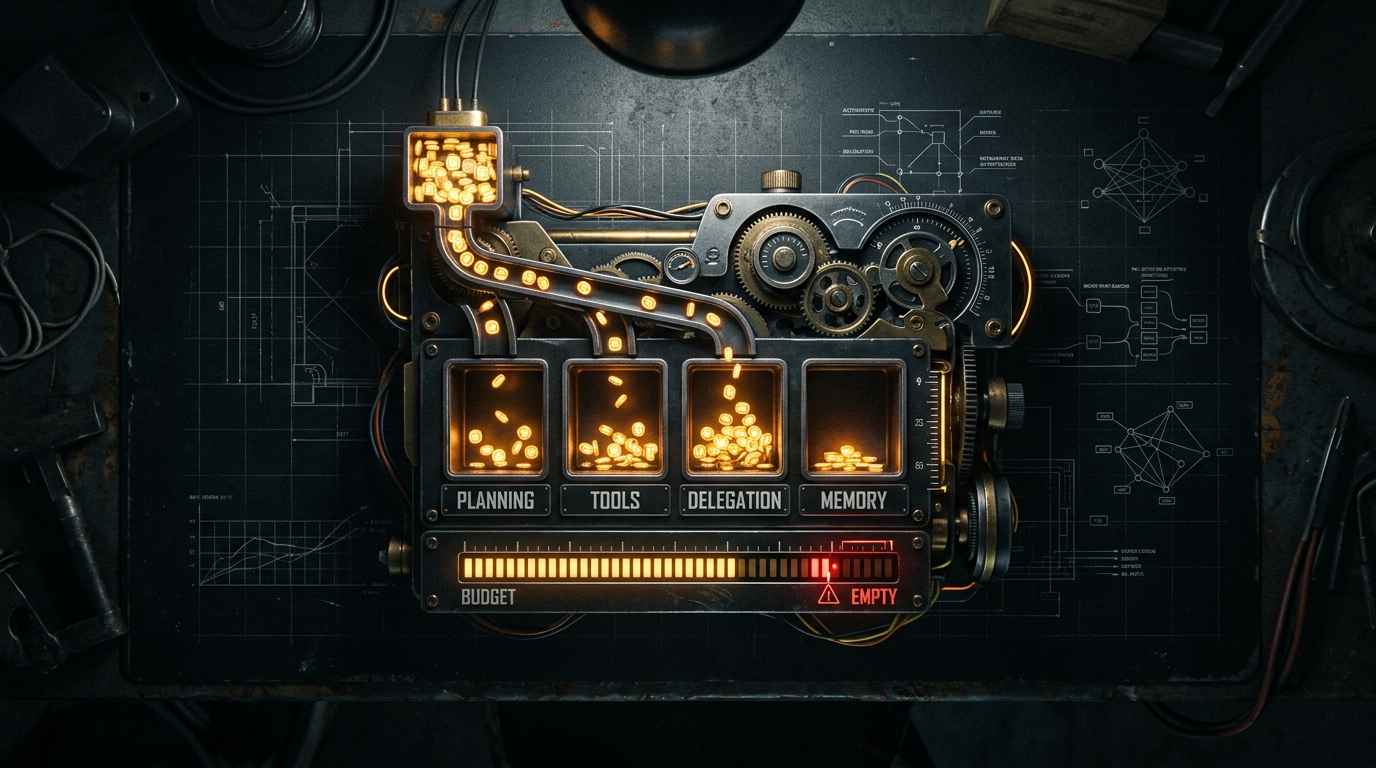
The Context Budget Is Your Agent's Real Architecture — Everything Else Is Plumbing
Every architectural decision in your agent system — subagent delegation, memory, tool design, model choice — boils down to managing a single finite resource: the context window. Here's how to treat the context budget as a first-class constraint, with concrete patterns that ship.

Event-Driven AI Agents Are Replacing the Request-Response Loop — and That Changes Everything
The synchronous agent loop is dying. In its place: event-driven agent systems built on Kafka, Flink, Temporal, and Restate. Here's why the shift is happening now, what the new architecture looks like in code, and what breaks when you get it wrong.
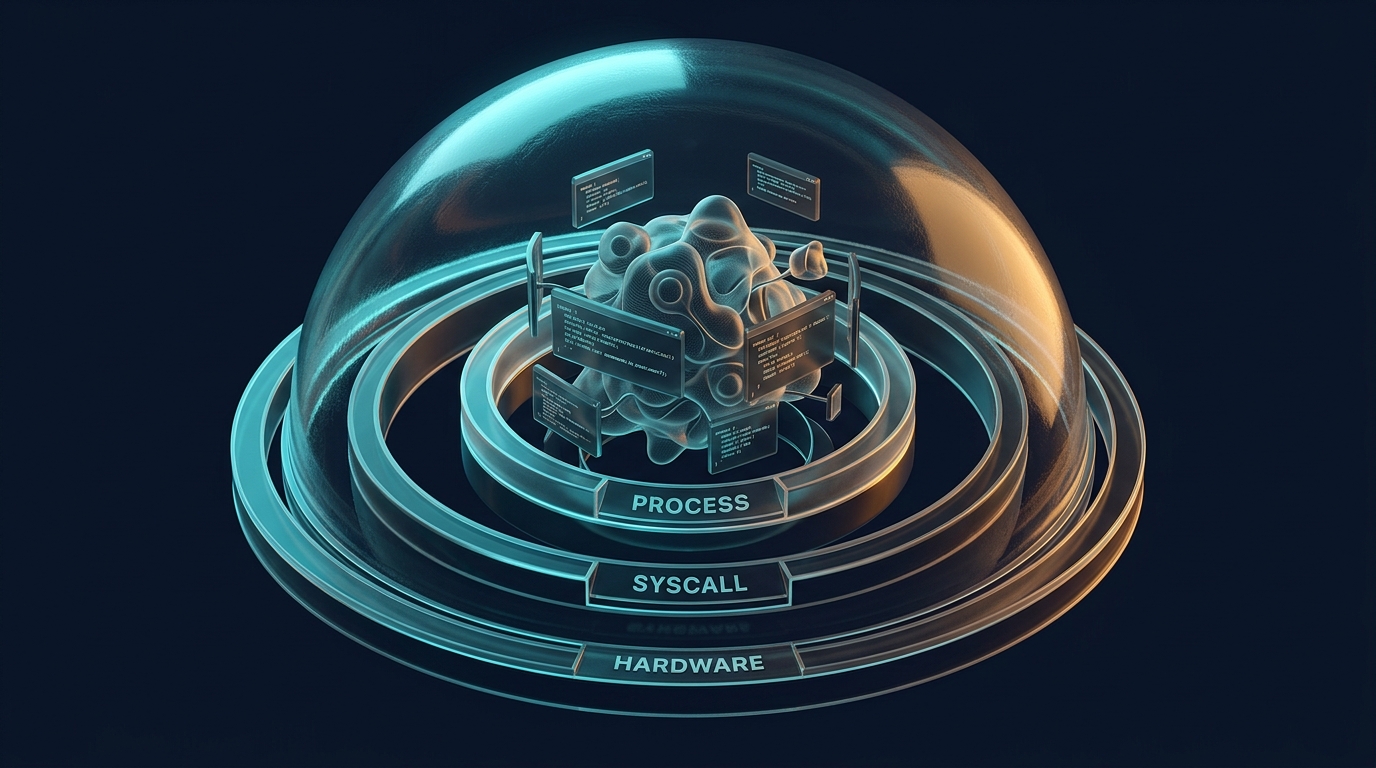
Agent Sandboxing: Firecracker, gVisor & Production Isolation
Docker containers aren't enough for AI agents. We break down Firecracker microVMs, gVisor, and Kata Containers — with code, benchmarks, and a decision framework for production.