Agent Architecture Is Converging — and That Changes How You Build
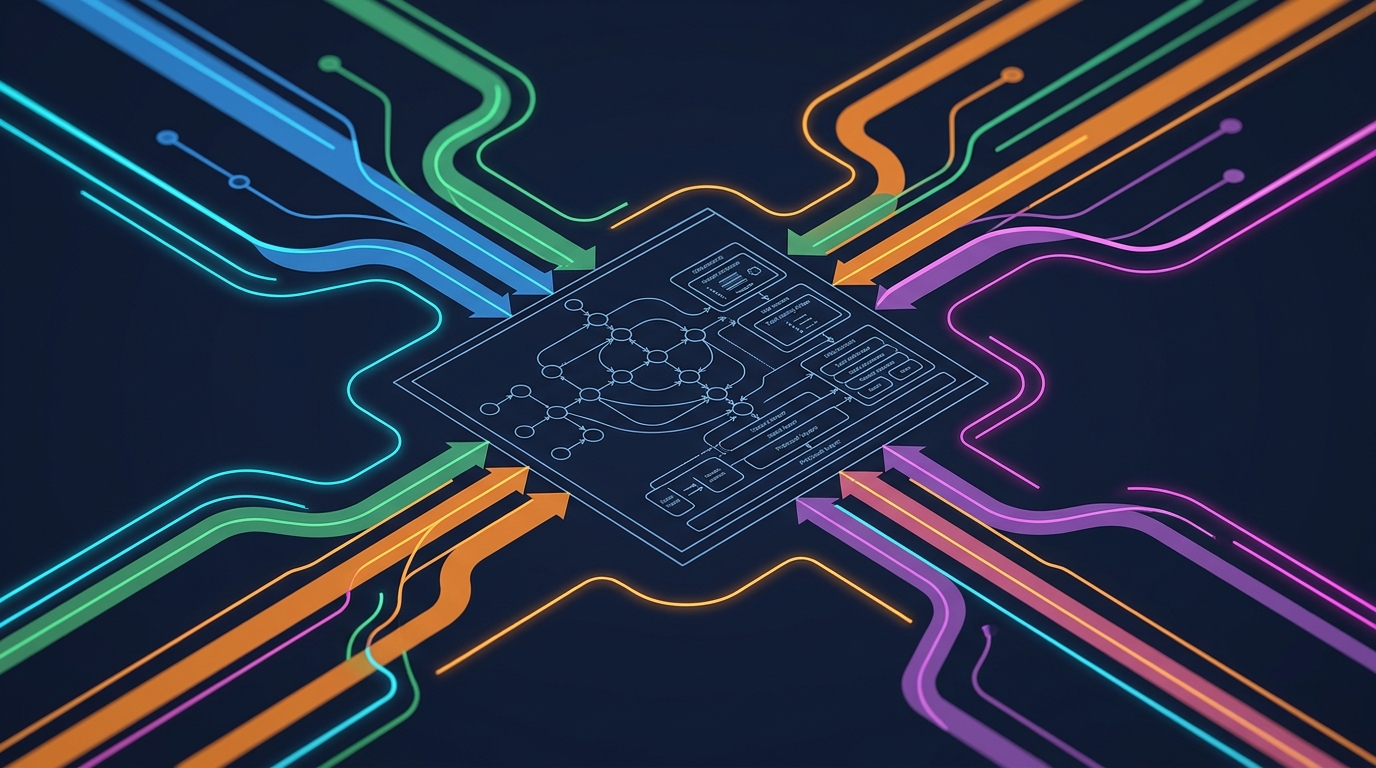
Every major agent framework now shares the same primitives: state graphs, structured tool calling via MCP, handoff delegation, and lifecycle hooks. The framework wars are ending. Here's what the convergence means for your stack — and where the real differentiation lives.
Twelve months ago, picking an agent framework meant betting on a philosophy. LangGraph was graph-based state machines. CrewAI was role-playing crews. AutoGen was group chat. OpenAI’s Swarm was an experimental sketch of handoffs. Each framework had a distinct mental model, distinct abstractions, and distinct failure modes. You couldn’t port an agent from one to another without rewriting the orchestration layer from scratch.
Mid-2026, that picture has collapsed. The frameworks are converging — fast — toward a shared set of architectural primitives. The divergence that defined 2024–2025 is giving way to a consensus architecture that every major framework now implements, with differences shrinking to syntax, model affinity, and operational defaults.
This isn’t speculation. We’ve watched the release notes across eight frameworks for six months. The pattern is unmistakable. And it changes the calculus for teams building production agents right now.
The Consensus Architecture: Four Primitives Every Framework Now Shares
Pull up the docs for LangGraph, OpenAI Agents SDK, Claude Agent SDK, Google ADK, CrewAI, or Microsoft Agent Framework 1.0. Beneath the marketing language, you’ll find four primitives that have become universal.
1. The State Graph (or equivalent)
Every framework now models agent execution as a directed graph with typed state. LangGraph was first to production with this — StateGraph with typed schemas, conditional edges, and checkpointing. But look at what followed.
OpenAI’s Agents SDK models handoffs as edges between agent nodes. Claude Agent SDK’s query() generator iterates through tool calls, responses, and subagent invocations — a traversal, even if the graph is implicit. Google ADK explicitly models agent pipelines as composable stages. Microsoft Agent Framework 1.0 ships with both a GroupChatManager and a Graph abstraction, reflecting the AutoGen and Semantic Kernel lineages merging into one API surface.
Even CrewAI, which built its brand on role-based crews, added explicit workflow graphs in 1.14.x. The abstraction is no longer “agents chatting in a room.” It’s “nodes in a typed state machine.”
The takeaway: If you’re evaluating frameworks today and one of them doesn’t have a first-class graph or state machine primitive, it’s behind. The graph is the agent now. The LLM is just one node in it.
2. Structured Tool Calling via MCP
MCP (Model Context Protocol) crossed 200 server implementations in early 2026. It is no longer a LangChain/Anthropic experiment — it’s the default tool integration layer across every framework worth using.
- Claude Agent SDK: deepest native MCP integration. One line of config (
mcpServers: {playwright: {command: "npx", args: ["@playwright/mcp@latest"]}}) connects an agent to any of 200+ servers. - LangGraph: MCP tools available via adapters in Agent Server, which exposes LangGraph agents as MCP tools themselves.
- CrewAI: native MCP support, plus native A2A. Tools defined as MCP servers are first-class citizens in crew definitions.
- Microsoft Agent Framework 1.0: native MCP + native A2A, shipping since GA on April 3, 2026.
- OpenAI Agents SDK: adopted MCP support, though integration depth trails Anthropic’s.
- Google ADK: MCP available via adapters, native A2A.
This is a dramatic shift from early 2025, when every framework had its own tool definition format. You’d write BaseTool subclasses for LangChain, FunctionTool wrappers for CrewAI, and @tool decorators for OpenAI — all incompatible. MCP has effectively become the USB-C of agent tooling.
As we wrote in our protocol stack analysis, MCP and A2A are consolidating under the Linux Foundation. The protocol wars aren’t over, but the outcome is increasingly clear.
3. Handoff / Delegation Patterns
Every framework now has a first-class primitive for one agent handing control to another. The implementations differ in naming and granularity, but the concept is identical:
- OpenAI Agents SDK:
handoff()— an agent executes a typed tool call to transfer control, passing conversation history. - Claude Agent SDK:
subagents— child agents with isolated context windows and scoped tool sets, defined viaoptions.agents. - LangGraph: nodes in a graph, with conditional edges routing state. Subgraphs for encapsulation.
- Google ADK: hierarchical agent composition with explicit parent-child delegation.
- CrewAI:
crew.kickoff()with task delegation between agents in a crew.
The convergence here is subtle but important. Early multi-agent systems (2023–2024) used unstructured message passing — agents “talking” to each other via chat. Production systems in 2026 use typed delegation: structured, auditable, and constrained. A handoff is a schema-validated event, not a chat message.
4. Lifecycle Hooks and Guardrails
Claude Agent SDK’s hooks system (PreToolUse, PostToolUse, Stop, SessionStart, SessionEnd) is the most expressive, but every framework now offers equivalent interception points:
- OpenAI Agents SDK: three-tier guardrails (input, output, tool) running in parallel with agent execution. If a guardrail fails, execution stops immediately.
- LangGraph:
interrupt()for human-in-the-loop, plusNodeInterruptfor programmatic control flow. - Google ADK: policy evaluation at each pipeline stage.
- Microsoft Agent Framework 1.0: human-in-the-loop patterns baked into the graph execution model.
The pattern is the same: intercept agent behavior at known lifecycle points, validate or transform, then proceed or abort. Production teams need this for governance, and every framework now ships it.
What This Means for Your Stack
If every framework implements the same primitives, the framework itself becomes less differentiated. This is the same dynamic we described in our analysis of the inference layer — vLLM and SGLang converging on FlashInfer kernels and OpenAI-compatible APIs. When the plumbing standardizes, the value migrates elsewhere.
The framework choice in mid-2026 is increasingly about three things:
1. Model affinity
Claude Agent SDK is deeply optimized for Claude models. If you’re building coding agents or research agents that need extended thinking and deep OS access, the integration depth is hard to beat. But you’re locked in — swap to GPT-5 and you’re rewriting tool schemas.
OpenAI Agents SDK is similarly optimized for GPT models, with native voice support via gpt-realtime and the cleanest handoff model in the ecosystem. But no native A2A, no built-in state persistence.
LangGraph remains the only framework that gives you full model flexibility with production-grade state management. If you need to run the same agent against Claude, GPT-5, and Gemini — swapping models based on cost, latency, or capability — LangGraph is the only game in town. We covered this trade-off in depth in our LangGraph vs OpenAI and Claude SDK comparison.
2. Language and ecosystem requirements
Google ADK supports four languages: Python, TypeScript, Java, and Go. If you’re in an enterprise Java shop, ADK is your only serious option. Microsoft Agent Framework 1.0 supports Python and .NET — the obvious choice for Azure-native teams.
CrewAI (52,400+ GitHub stars, ~2 billion agent executions in the past 12 months) is Python-only but has the largest community and the fastest prototyping loop. Ideal for proofs of concept that need to become production systems.
3. Protocol interoperability
If your architecture involves agents from different vendors communicating with each other — a Claude-based research agent talking to a Gemini-based data agent, for instance — A2A support becomes critical. CrewAI and Microsoft Agent Framework 1.0 ship native A2A. Google ADK is A2A-native by design. Claude Agent SDK and OpenAI Agents SDK do not support A2A natively.
This matters more than most teams realize. The protocol layer is where vendor lock-in breaks down. MCP standardizes tool access. A2A standardizes agent-to-agent communication. Together, they make it possible to compose agents across frameworks and providers — which means the framework you pick today is not a permanent decision.
Where the Real Differentiation Lives Now
If the frameworks are converging, where should you invest architectural effort? Our thesis — laid out in the four-layer agent infrastructure stack — is that the moat lives in the layers below the framework:
The orchestration runtime. State persistence, checkpointing, retry logic, and fault tolerance. LangGraph’s checkpointing with LangSmith is the most mature here. OpenAI Agents SDK leaves persistence to you. Claude Agent SDK’s session management via session_id is functional but not designed for multi-hour, multi-turn production workflows. This is where the framework convergence is least complete — and where your architecture decisions have the most leverage.
The tool execution environment. MCP standardized tool definition. It didn’t standardize tool execution. Running untrusted generated code in a shell is still dangerous. Sandboxing — via Firecracker microVMs, gVisor, or container isolation — remains the responsibility of your infrastructure team, not your framework. Every framework assumes you’ve solved this. Most teams haven’t.
Observability and governance. LangSmith, Langfuse, and Arize Phoenix are racing to become the Datadog of agent systems. But framework-level tracing (OpenAI’s built-in traces, LangSmith’s LangGraph integration) only covers the happy path. Production observability requires OpenTelemetry traces that span the framework, the model API, the tool execution, and the infrastructure. That’s a platform concern, not a framework concern.
The model routing layer. When you can swap models per-node in a graph — use Claude for reasoning-intensive steps, GPT-5 for structured extraction, Gemini for long-context retrieval — the framework’s model affinity becomes less relevant. But this requires a routing layer that frameworks don’t provide natively. This is infrastructure.
The Convergence Is Good News
We’re not complaining about the convergence. It’s a sign of maturity.
Twelve months ago, the framework landscape was a source of decision paralysis for engineering teams. You had to place a bet — and the bet carried real technical risk. What if LangGraph’s graph model didn’t fit your use case? What if CrewAI’s role-based abstraction was too rigid?
Today, the risk is lower. The primitives are the same. A state graph in LangGraph maps cleanly to a handoff chain in OpenAI Agents SDK. An MCP tool works across all eight frameworks. A subagent in Claude Agent SDK architecturally resembles a node in a CrewAI crew.
The framework you pick is increasingly a question of model preference, language ecosystem, and operational defaults — not a bet on a fundamentally different architecture.
This is how platforms mature. HTTP standardized web servers. POSIX standardized operating systems. OpenAI-compatible APIs are standardizing model serving. MCP and A2A are standardizing agent protocols. State graphs are standardizing agent orchestration.
The convergence frees you to focus on what actually differentiates your product: the domain logic, the data, the user experience, and the infrastructure that keeps it all running at scale.
What to Watch in the Second Half of 2026
Three trends will accelerate the convergence:
1. MCP will become table stakes, not a differentiator. When every framework supports it natively, the value shifts from “does your framework support MCP?” to “how well does your MCP tool server handle production load?” Tool execution reliability — retry semantics, rate limiting, circuit breaking — will become the new battleground.
2. A2A will determine which frameworks survive in the enterprise. Enterprises don’t bet on single-vendor agent stacks. They compose agents across clouds, models, and frameworks. A2A-native frameworks (Google ADK, CrewAI, Microsoft Agent Framework) have an architectural advantage for multi-vendor deployments. Frameworks without A2A (Claude Agent SDK, OpenAI Agents SDK) will either adopt it or cede the enterprise composability market.
3. The graph primitive will become implicit. LangGraph made the state graph explicit — you define nodes, edges, and conditional routing yourself. The next generation of frameworks will derive the graph from your code structure. Claude Agent SDK’s query() generator already hints at this: the agent’s execution path is a traversal, but you don’t define the graph manually. OpenAI’s handoff model similarly derives routing from agent behavior, not explicit graph topology. The graph won’t disappear — it’ll become invisible.
Our bet: the framework layer commoditizes by Q4 2026. The infrastructure layer — orchestration runtimes, sandboxed tool execution, cross-framework observability, and model routing — is where the next wave of differentiation will concentrate. If you’re building an agent platform today, that’s where you should be investing.
Further reading:
- The Four-Layer Agent Infrastructure Stack: Where the Moat Actually Lives in 2026
- vLLM and SGLang Are Converging — and That Changes the Inference Stack
- The AI Agent Protocol Stack: MCP, A2A & What Comes Next
- LangGraph vs OpenAI and Claude Agent SDKs Compared
Primary sources: Morph LLM — AI Agent Frameworks 2026 Update (June 9, 2026), Let’s Data Science — AI Agent Frameworks Compared (March 27, 2026), Codebridge — AI Agent Architecture Patterns in 2026 (April 10, 2026).
Related Posts
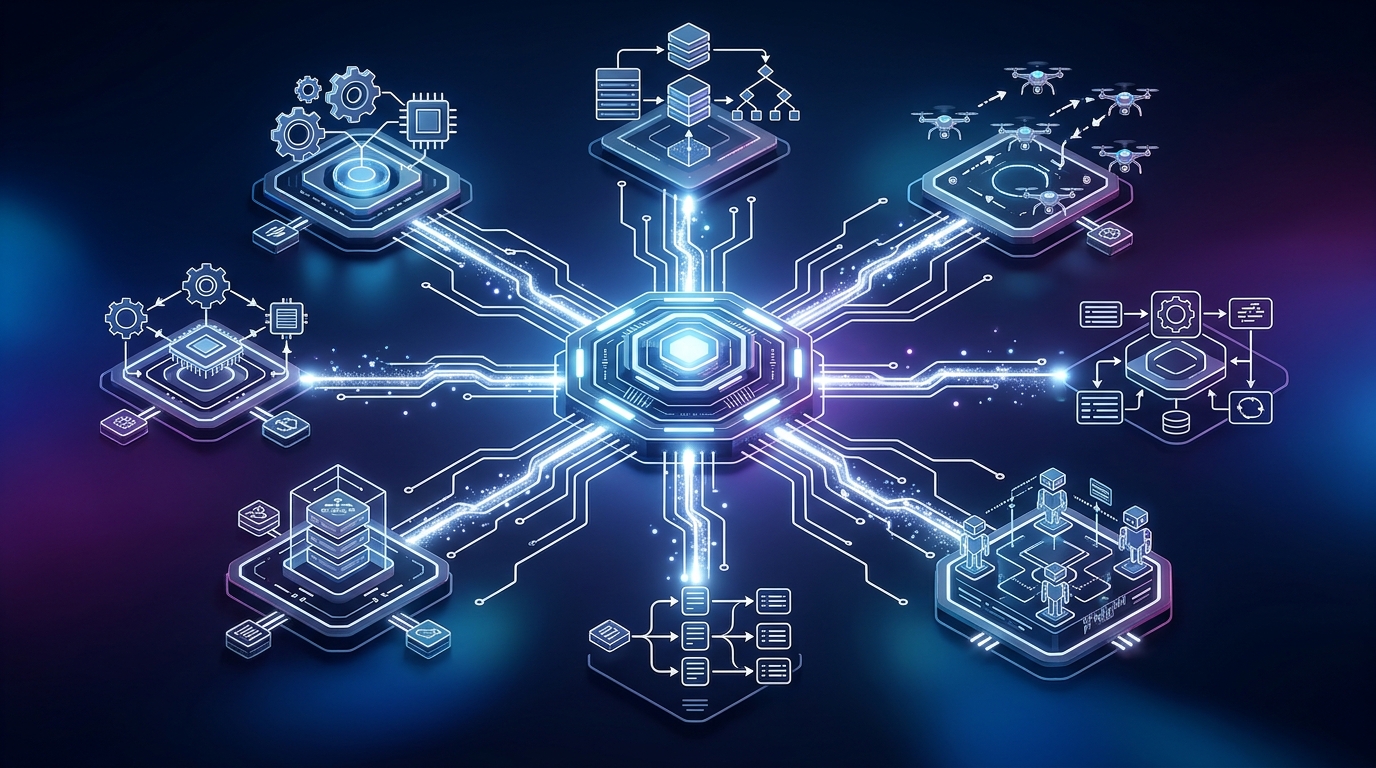
Complete Guide to AI Agent Frameworks 2026
OpenAI Agents SDK, Claude Agent SDK, LangGraph, CrewAI compared — with benchmarks and a decision framework for your AI stack.
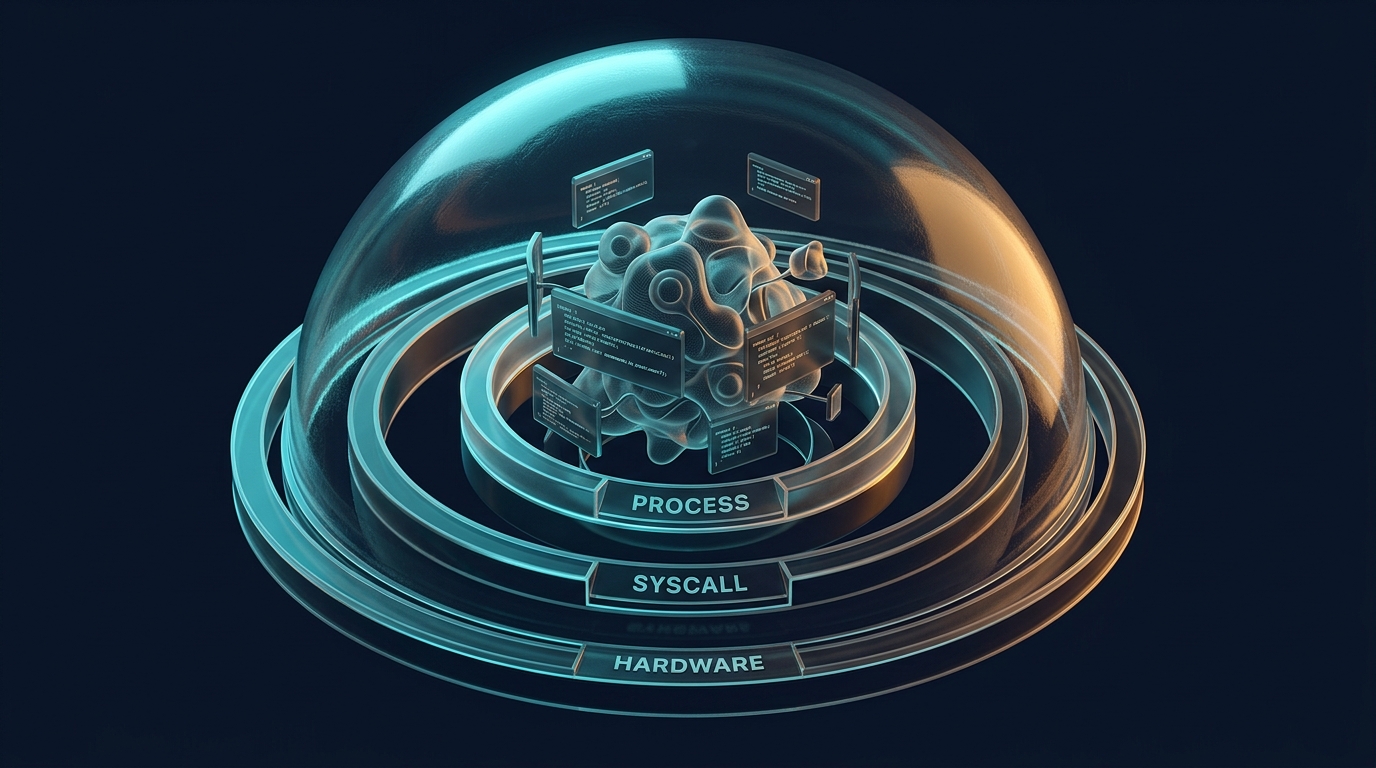
Agent Sandboxing: Firecracker, gVisor & Production Isolation
Docker containers aren't enough for AI agents. We break down Firecracker microVMs, gVisor, and Kata Containers — with code, benchmarks, and a decision framework for production.
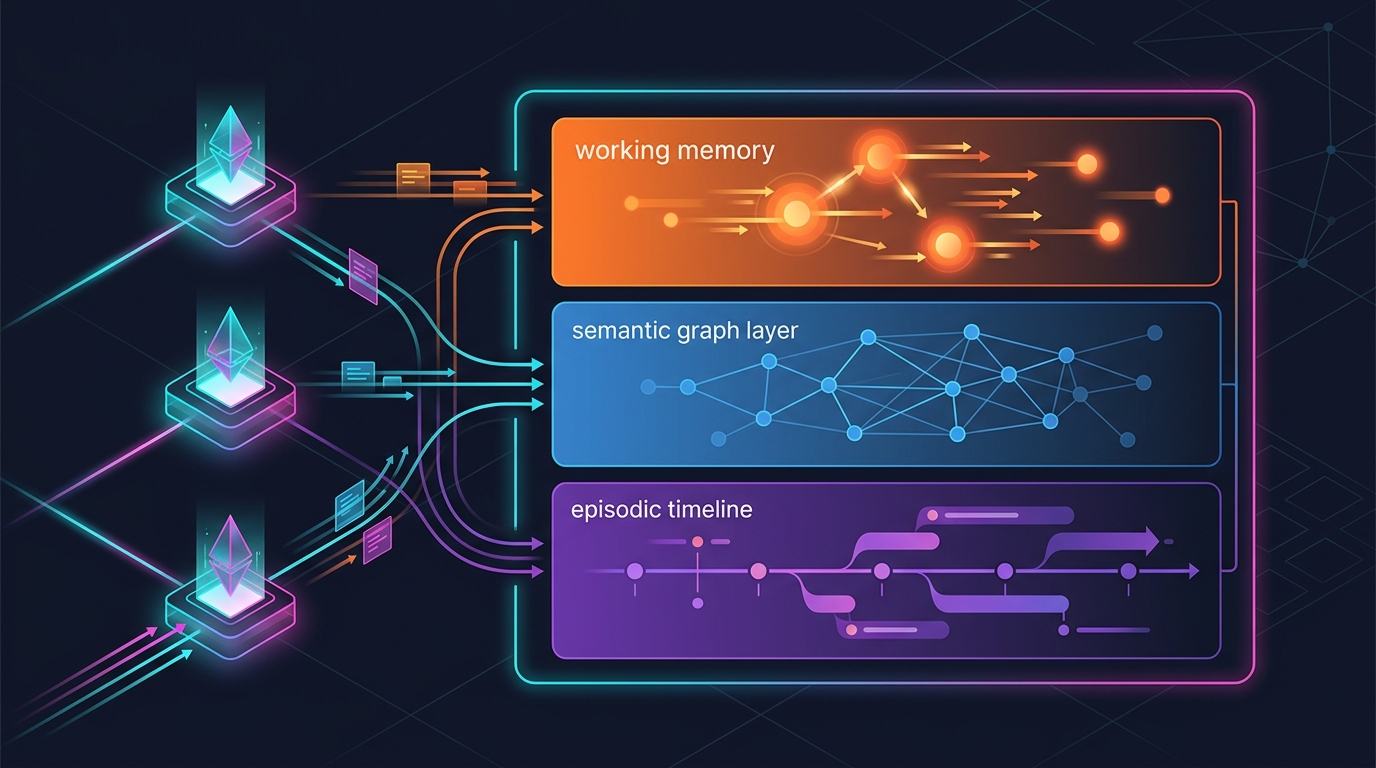
Multi-Agent Memory Architecture: Patterns for 2026
Shared, isolated, or hierarchical? We break down the three memory architectures production multi-agent systems use — with benchmarks, code patterns, and the tradeoffs nobody talks about.