The Great LLM Commoditization of 2026 — and Where the Moat Actually Lives Now

GPT-4 cost $60/M tokens in 2023. GPT-5.4 costs $2.50. Anthropic hit a $30B run rate and filed to go public at $965B. OpenAI followed suit, then immediately signaled deeper price cuts. The clearest signal yet: frontier models are becoming commodities. Here's where the infrastructure moat actually shifts.
Three weeks ago, your team’s model selection spreadsheet still mattered. Today it mostly doesn’t — and that’s the most important thing to understand about AI infrastructure right now.
Let’s rewind the tape. In March 2023, GPT-4 launched at $60 per million input tokens and $120 per million output tokens. Running a production agent that consumed 10M tokens daily — modest by today’s standards — cost roughly $1,800 per day. You rationed intelligence. You built cascading fallback chains: cheap model first, expensive model only when necessary. Model selection was a core engineering decision.
Fast forward to June 2026. GPT-5.4 costs $2.50/$10 per million tokens. That same 10M-token daily workload costs $75. The rationing era is over. And the price collapse is still accelerating.
On June 11, the Wall Street Journal reported that OpenAI is considering significant price cuts across its model lineup. Sam Altman had previously called steep API costs a “huge issue” for enterprise adoption. The move comes days after OpenAI filed for its IPO and weeks after Anthropic filed its own, targeting a valuation near $1 trillion.
This is not normal competition. This is commoditization playing out in real time — and it changes where the value lives in the AI stack.
The 12x collapse in 36 months
The numbers are stark. GPT-4 launched at $60/$120 per 1M tokens in March 2023. GPT-5.4 (May 2026) runs at $2.50/$10. That’s a 12x reduction in input cost in three years. Anthropic’s Opus line saw similar compression: Claude Opus 4.6 now costs $5/$25 — roughly half what Opus commanded a year ago and 67% less than six months ago, according to Grizzly Peak Software’s pricing analysis.
The budget tier tells an even more dramatic story. Gemini 2.0 Flash-Lite costs $0.075 per million input tokens. GPT-5.4 nano costs $0.05. DeepSeek V3.2 sits at $0.28/$0.42 while matching GPT-4-class capability. If you’re running classification, routing, or extraction workloads on anything more expensive than these, you’re overpaying — probably by a factor of 10-20x.
What broke the dam? Four forces converged:
- DeepSeek’s open-weight disruption. When DeepSeek V3 hit $0.14 input in early 2025 with frontier-adjacent performance, every closed-source lab had to justify a 10-20x premium. They couldn’t.
- Mixture-of-Experts at scale. DeepSeek, Mistral, and Google’s Gemini 2.5 line all activate only a fraction of their parameters per token. Inference cost fell without sacrificing benchmark scores.
- Hardware contracts. Anthropic’s deals with AWS Trainium and Google/Broadcom TPUs, plus OpenAI’s expanded GB200 capacity, created room for repeated cuts.
- Cached input pricing. Anthropic’s prompt caching, OpenAI’s automatic prefix cache, and Gemini’s context caching mean repeat traffic is now 2-10x cheaper than headline rates. Most teams haven’t rebuilt their pipelines to exploit this.
The result: as Sherwood News put it on June 11, “It’s the clearest signal yet that AI models are becoming commoditized.”
Why the IPO filings accelerate everything
If you’re wondering why the price war is intensifying now, follow the money.
Anthropic confidentially filed for IPO on June 1, 2026, targeting a valuation around $965 billion — built on a $30 billion annualized revenue run rate that had grown 80x, as VentureBeat reported. OpenAI filed a week later on June 8, with $25 billion in annualized revenue.
Public markets demand growth narratives. When two competitors are racing toward IPOs within weeks of each other — and one (Anthropic) has demonstrably better unit economics on the revenue-per-token front — the other has to cut prices to protect market share. OpenAI’s price-cut leak on June 11 wasn’t a coincidence. It was pre-IPO positioning.
But there’s a deeper dynamic here. Both companies’ S-1 filings will force public scrutiny of their margins on API revenue. If frontier models are commoditizing this fast, the “sell tokens at a premium” business model that generated $55B in combined run-rate revenue starts looking shaky. The market will ask: what’s your moat?
The inference layer is commoditizing too
It’s not just the models. The infrastructure underneath them is consolidating.
vLLM and SGLang — the two dominant open-source inference engines — now share NVIDIA’s FlashInfer attention kernels and expose identical OpenAI-compatible APIs. As we covered in our convergence analysis, this means the inference layer is effectively standardizing. vLLM hit 2 million weekly installs. SGLang spun out as RadixArk with $100 million in seed funding at a $400 million valuation. Both engines run hundreds of thousands of GPUs daily for Google, Microsoft, xAI, and others.
When the inference engines share kernels, the API surface is identical, and both projects are venture-backed, you don’t have a competitive differentiator at the serving layer. You have a commodity with open-source pricing pressure.
The GPU cloud market is following the same pattern. RunPod, Lambda, and CoreWeave are converging on H100 and B200 pricing within narrow bands. The “save up to 56%” window from last quarter is closing as the market finds its equilibrium.
So where does the moat actually live?
If models are commodities and inference is standardizing, the value migrates to three layers. We’ve been building our thesis around this shift — the four-layer agent infrastructure stack — and the evidence is accumulating fast.
1. The agent infrastructure layer: what turns a model call into a reliable system
The real work in 2026 isn’t calling a model. It’s everything around the call.
Production agents need sandboxed execution environments (Firecracker, gVisor), state management that survives multi-turn tool loops, human-in-the-loop interrupt patterns, structured output validation, retry and fallback logic, and audit trails for every decision. None of this comes from the model. All of it has to be built.
This is what we call the agent infrastructure tax — the undifferentiated engineering work that turns a clever demo into something that survives contact with real users. As the Epsilla team documented, “Building production-grade AI agents has been historically blocked by months of undifferentiated work on sandboxing, state management, and orchestration loops before any real business value arrives.”
Anthropic’s Managed Agents, OpenAI’s agent SDK, and Google’s ADK are all racing to absorb this infrastructure tax into the platform. The platforms that do it best capture the value the models are leaking.
2. Enterprise platform lock-in: where the incumbents win
Salesforce Agentforce has 8,000+ customers and Flex Credits pricing at $0.10 per action. Microsoft Copilot Studio runs 400,000+ custom agents across 160,000 organizations. ServiceNow ranked #1 for AI Agents in the 2025 Gartner Critical Capabilities report. We compared the three platforms in detail.
These platforms aren’t winning because their models are better. They’re winning because the agent is embedded in the workflow the enterprise already uses. The model underneath is irrelevant — ServiceNow could swap GPT-5.4 for Claude Sonnet 4.6 and most customers wouldn’t notice or care. The moat is the integration surface: the CRM data, the IT service management workflows, the existing identity and permissions model.
When models cost $60/M tokens, enterprises cared about which model powered their agents. At $2.50/M, they care about whether the agent closes the ticket, routes the lead, or approves the expense report.
3. Proprietary data + workflow: the durable differentiator
The most durable moat in the AI stack has nothing to do with AI. It’s the proprietary data that only your organization has, embedded in workflows that took years to refine.
A retail inventory agent running LangGraph, calling GPT-5.4 nano for classification, hooked into your actual warehouse management system and trained on your three years of order patterns — that’s not a commodity. The model is $0.05/M tokens. The value is the workflow and the data. Every vertical tutorial we’ve published reinforces this: the AI is 20% of the work. Integration, business logic, and domain-specific error handling are the other 80%.
What you should actually do
If this thesis is right — and the evidence from the last three weeks is hard to ignore — here’s our operating advice for engineering teams:
Stop optimizing model selection. The difference between GPT-5.4 at $2.50/M and Claude Sonnet 4.6 at $3/M is noise. Pick whichever has better tool-calling reliability for your use case and move on. The real cost isn’t the token price; it’s the engineering hours spent debating it.
Audit your pipelines for the infrastructure tax. If you’re spending more than 30% of your agent engineering time on sandboxing, state management, retry logic, or observability plumbing, you’re building undifferentiated infrastructure. Someone (Anthropic, OpenAI, or an open-source framework) will ship that layer soon. Don’t build what’s about to be free.
Build against the convergence, not the divergence. vLLM and SGLang exposing identical APIs means your serving layer is portable. Anthropic’s Model Context Protocol (MCP) becoming the de facto standard means your tool integration layer is portable. Write your agent logic once, and keep the model and inference engine swappable.
Invest in the moat layers. Proprietary data pipelines. Domain-specific evaluation sets. Workflow integrations that took six months to harden. The model underneath will get cheaper and more capable every quarter. The integration code you write today won’t write itself.
The punchline
In 2023, the frontier model was the product. In 2026, the model is the cheapest component in the stack — and getting cheaper by the month. The infrastructure that orchestrates, secures, observes, and integrates those model calls is where the value lives.
The companies that understand this shift are building agent platforms, observability tooling, sandboxing infrastructure, and workflow engines. The companies still betting on premium token margins are filing IPOs and quietly slashing prices.
If you’re building AI infrastructure in 2026, build above the model. That’s where the moat is.
Sources and further reading:
- OpenAI Mulls Slashing Prices Ahead of Anthropic Competition — CNBC/WSJ, June 11, 2026
- Welcome to the OpenAI, Anthropic, and Google Price Wars — Sherwood News, June 11, 2026
- Anthropic Files to Go Public, Setting Stage for Huge IPO — NYT, June 1, 2026
- OpenAI Files for US IPO After Anthropic — Reuters, June 8, 2026
- LLM API Pricing 2026 — Compare GPT-5, Claude 4, Gemini 2.5, DeepSeek Costs — TLDL
- The Price of Tokenmaxxing: Claude’s Explosive Growth — Madrona
- vLLM and SGLang Are Converging — and That Changes the Inference Stack — TURION.AI
- The Four-Layer Agent Infrastructure Stack — TURION.AI
Related Posts

State of AI Infrastructure 2026: Mid-Year Reality Check
A mid-2026 ground-truth report: B200 reality, SGLang's $400M spinout, agent infra going mainstream, and the three patterns dominating production.
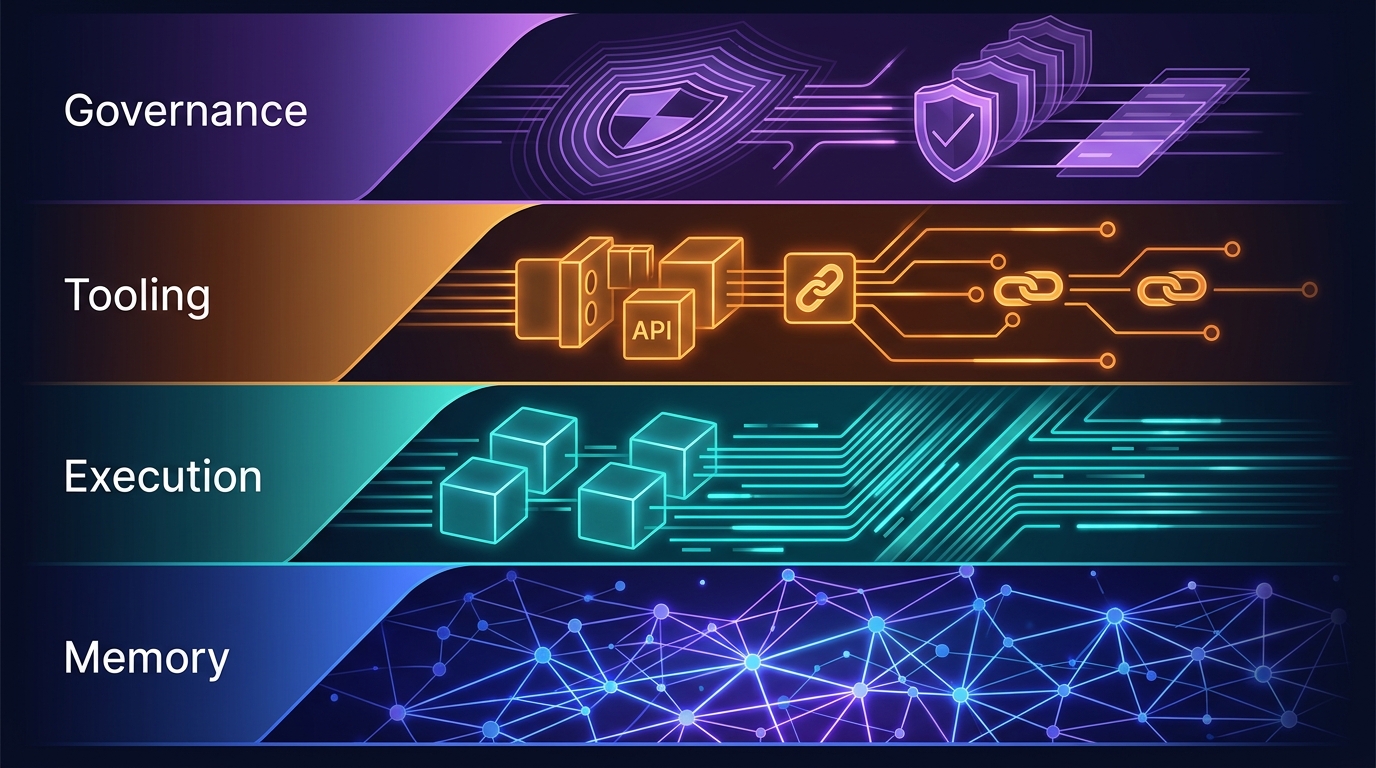
The Four-Layer Agent Infrastructure Stack: Where the Moat Actually Lives in 2026
A generation of agent startups will get commoditized. The ones that survive own one of four stateful layers: Memory, Execution, Tooling, or Governance. Here's how to tell the difference between a moat and glue code.
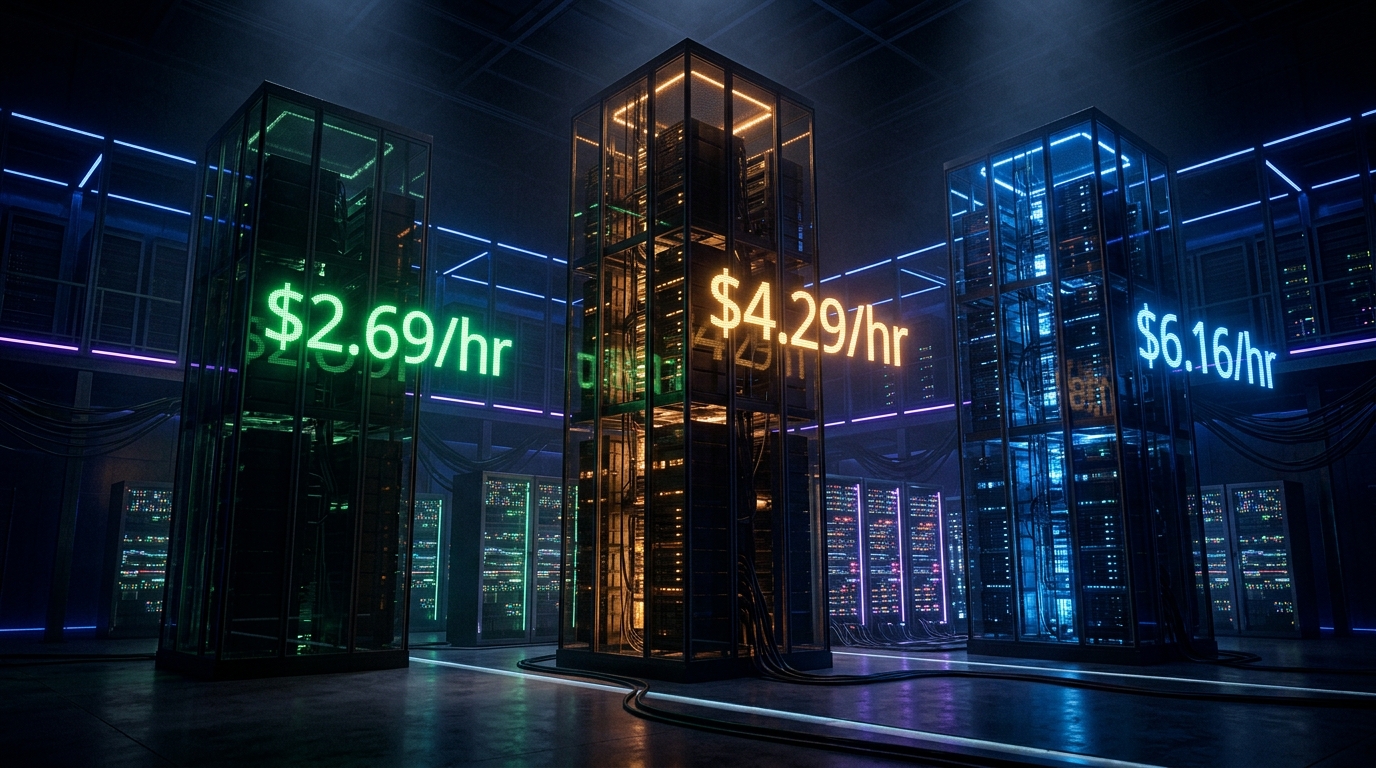
GPU Clouds: RunPod vs Lambda vs CoreWeave — June 2026
Save up to 56% on H100 inference: RunPod $2.69/hr vs CoreWeave $6.16/hr vs Lambda $4.29/hr. Which GPU cloud actually fits your agent workloads in June 2026?