The Agent Pricing Crisis: Nobody Knows How to Bill for Intelligence

Anthropic paused its Agent SDK billing overhaul on launch day. Salesforce ditched $2/conversation for Flex Credits. Per-seat SaaS is dying, and agent-native pricing remains an unsolved equation. Here's why — and what comes next.
On June 15, 2026 — the day it was supposed to take effect — Anthropic paused its Agent SDK billing overhaul.
The plan had been straightforward on paper: move all automated Claude usage (Agent SDK, headless claude -p, CI/CD pipelines) off flat-rate subscriptions and onto a separate monthly credit pool billed at API rates. Pro users would get $20/month. Max 5x: $100. Max 20x: $200. Burn through it, and you’d pay standard API token rates for the rest of the month.
The pause, confirmed on launch day, was the latest in a year-long series of billing reversals — Anthropic had already banned third-party agents in February and tightened rate limits in April. This wasn’t a failed product launch. It was a pricing model collapsing under its own math.
The underlying problem is bigger than one vendor. Nobody in the industry has figured out how to price AI agents. The SaaS per-seat model that powered two decades of enterprise software is breaking down. The replacements — conversation-based, credit-pool, per-task, outcome-based — are all being stress-tested simultaneously, and most of them are failing.
The SaaSpocalypse: $285 Billion Erased While Nobody Was Watching
February 2026 wiped $285 billion from software company valuations in a single month. It wasn’t a market correction — it was a structural repricing driven by one uncomfortable fact: AI-native spending surged 94% year over year while traditional SaaS growth flatlined at 8%, according to data analyzed by The Next Web.
The per-seat model made sense when software was a tool that humans operated. You licensed access per employee who needed it. Revenue scaled linearly with headcount. Predictable, auditable, CFO-approved.
Agents break this model completely. An agent doesn’t “use” software — it executes work. One agent session might complete 50 tasks that previously required five different SaaS products and twelve human operators. How do you bill for that? Per seat? There are zero humans in the loop. Per task? Fine, but what’s a task — a single API call, a completed workflow, a resolved customer issue?
Every vendor is answering differently. That’s the crisis.
The Math That Broke Anthropic’s Billing
Anthropic’s problem was arithmetic, not marketing. Zed Industries estimated that Claude subscriptions subsidized automated agent usage by roughly 15x to 30x compared to API pricing. A Pro subscriber paying $20/month could burn through hundreds of dollars in API-equivalent tokens by running headless agents 24/7 in CI pipelines.
This was never sustainable. But when Anthropic tried to fix it — by splitting automated usage onto a separate credit — they ran into a wall: the split didn’t map to how developers actually work. Interactive Claude Code sessions and automated claude -p invocations blur together in practice. A developer prototypes interactively, wraps it in a script, schedules it via cron, then debugs interactively again. Which part is “subscription” and which is “agent SDK credit”? The distinction collapses under real workflow.
The pause signals something deeper: Anthropic realized the pricing model was solving a vendor-side accounting problem, not a customer-side value problem. And that’s the thread running through every agent pricing experiment in 2026.
Three Models, Three Problems
1. Conversation-Based Pricing — Already Obsolete
Salesforce launched Agentforce at $2 per conversation. Six months later, it pivoted to Flex Credits — a consumption-based pool that decouples billing from the “conversation” as a unit. The reason: conversations are meaningless for enterprise agents. An agent that resolves a $50,000 invoice dispute in 12 turns and an agent that answers “what’s my order status” in 2 turns both count as one conversation. The pricing bears no relationship to value delivered or cost incurred.
ServiceNow and Microsoft are sticking with per-user-per-month models — $100 to $150/user/month — which feels familiar but dodges the fundamental question: what happens when one “user” is actually dozens of agent sub-processes running autonomously?
2. Credit Pools — Anthropic’s Aborted Experiment
The credit pool model ($20/$100/$200 tiers) maps cleanly to token costs — it’s just pre-paid API usage with a ceiling. But it inherits the worst properties of both subscription and usage-based pricing: customers face unpredictable bills if they exceed the credit, and vendors lose the predictability of subscription revenue.
The Claude Agent SDK credit was also per-user with no rollover — unused credits expired monthly. The cognitive load of tracking credit burn across a team of developers was, in retrospect, a non-starter.
3. Outcome-Based Pricing — The Holy Grail Nobody Can Measure
The dream: charge per resolved ticket, per processed claim, per shipped feature. Align vendor revenue with customer value.
The reality: defining “resolved” is a governance problem. A support agent that answers 95% of questions correctly but hallucinates on 5% — did it resolve anything? Outcome-based pricing requires shared definitions of success, which require monitoring, evaluation frameworks, and SLA agreements that most enterprises haven’t built yet. As we covered in our enterprise TCO analysis, the governance layer is the single most underestimated cost in agent deployment.
The Inference Cost Problem Nobody Admits
Behind every pricing debate is a physics problem: agentic AI is 5x to 30x more expensive per task than standard chatbots. Gartner’s March 2026 analysis confirmed what practitioners already knew — agents that plan, retrieve context, invoke tools, reflect on output, and self-correct consume dramatically more tokens than a single-turn Q&A.
A chatbot response might cost $0.001. A multi-step agent completing a complex task can cost $0.10 to $1.00 — a 100x to 1,000x multiplier. At enterprise scale, this pushes monthly inference bills into the tens of millions.
The “Inference Flip” — the point where cumulative spending on running models surpassed training — occurred in early 2026. Inference now accounts for roughly two-thirds of all global AI compute spend and 85% of the enterprise AI budget. The economics of training billion-dollar foundation models dominated headlines through 2025. But the real cost story is in production inference — every token an agent generates is a recurring expense that compounds monthly.
This is why Anthropic’s Fable 5 ran into export controls — the hardware constraints on inference capacity are now geopolitical. And it’s why the hardware layer is evolving rapidly: NVIDIA’s GB200 NVL72 delivers roughly 10x more tokens per watt than Hopper, and the Blackwell Ultra line claims up to 35x lower costs for agentic workloads specifically. The hardware economics are improving faster than the billing models can keep up.
Where This Is Actually Heading
The agent pricing crisis isn’t going to be solved by any single model. It’s going to fragment into a stack of pricing layers that mirrors the infrastructure stack:
- Token-level costs at the model API layer (OpenAI, Anthropic, Google) — pure usage, auditable, predictable
- Platform-level credits at the orchestration layer (Salesforce Flex, ServiceNow) — abstract tokens into “work units” that enterprises can budget
- Outcome-level contracts at the application layer — the model we explored in our enterprise platform comparison, where $2/conversation was never going to work because it didn’t match how value is actually created
The vendors who survive this transition will be the ones whose pricing models are legible. Not cheapest. Not most usage-based. Legible: a customer can look at a bill and map it directly to the business value received.
Right now, nobody has achieved that. Anthropic’s pause proves it. Salesforce’s pivot proves it. The $285 billion SaaSpocalypse proves it.
What to Do While the Industry Figures It Out
If you’re building agents in mid-2026, here’s our team’s advice:
Don’t commit to any single vendor’s agent pricing model right now. Everything is negotiable, and everything is changing. Enterprise contracts signed on per-conversation pricing in January are being renegotiated in June. Lock in API access pricing — that’s stable. Layer your own cost controls on top.
Build inference FinOps from day one. Track cost per task, not cost per token. A $0.12 task that succeeds is cheaper than a $0.04 task that requires three retries. Your monitoring should surface the ratio of successful completions to total token spend — we call this “task-level unit economics” and it’s the metric that matters when pricing models are unstable.
Treat agent cost as a design constraint, not an afterthought. The model you choose for a given subtask — GPT-5.2 at $1.75/$14.00 per million tokens vs. Claude Opus 4.7 at $5/$25 — matters less than whether you’re routing simple classification to a $0.10/M model and reserving expensive reasoning for the 5% of tasks that need it. As we wrote in the four-layer agent infrastructure stack, the moat lives in architecture decisions, not model selection.
The pricing crisis is a symptom of a deeper shift: software is transitioning from a tool you license to an outcome you purchase. The billing models haven’t caught up because the industry hasn’t agreed on what the value unit is. When it does — and it will, probably within 12 to 18 months — the vendors who got the model right will capture disproportionate market share.
Until then, we’re all in the same boat, watching Anthropic pause billing changes on launch day and wondering what our agent bill will look like next month.
Related Posts
LiteLLM vs Portkey vs Kong: LLM Gateway Pricing — June 2026
LiteLLM is free but costs $500–$2,000/mo to self-host. Portkey starts at $49/mo (log-based). Kong at $25/mo per control plane. The real cost of each — with hidden ops and scaling traps.

The Great LLM Commoditization of 2026 — and Where the Moat Actually Lives Now
GPT-4 cost $60/M tokens in 2023. GPT-5.4 costs $2.50. Anthropic hit a $30B run rate and filed to go public at $965B. OpenAI followed suit, then immediately signaled deeper price cuts. The clearest signal yet: frontier models are becoming commodities. Here's where the infrastructure moat actually shifts.
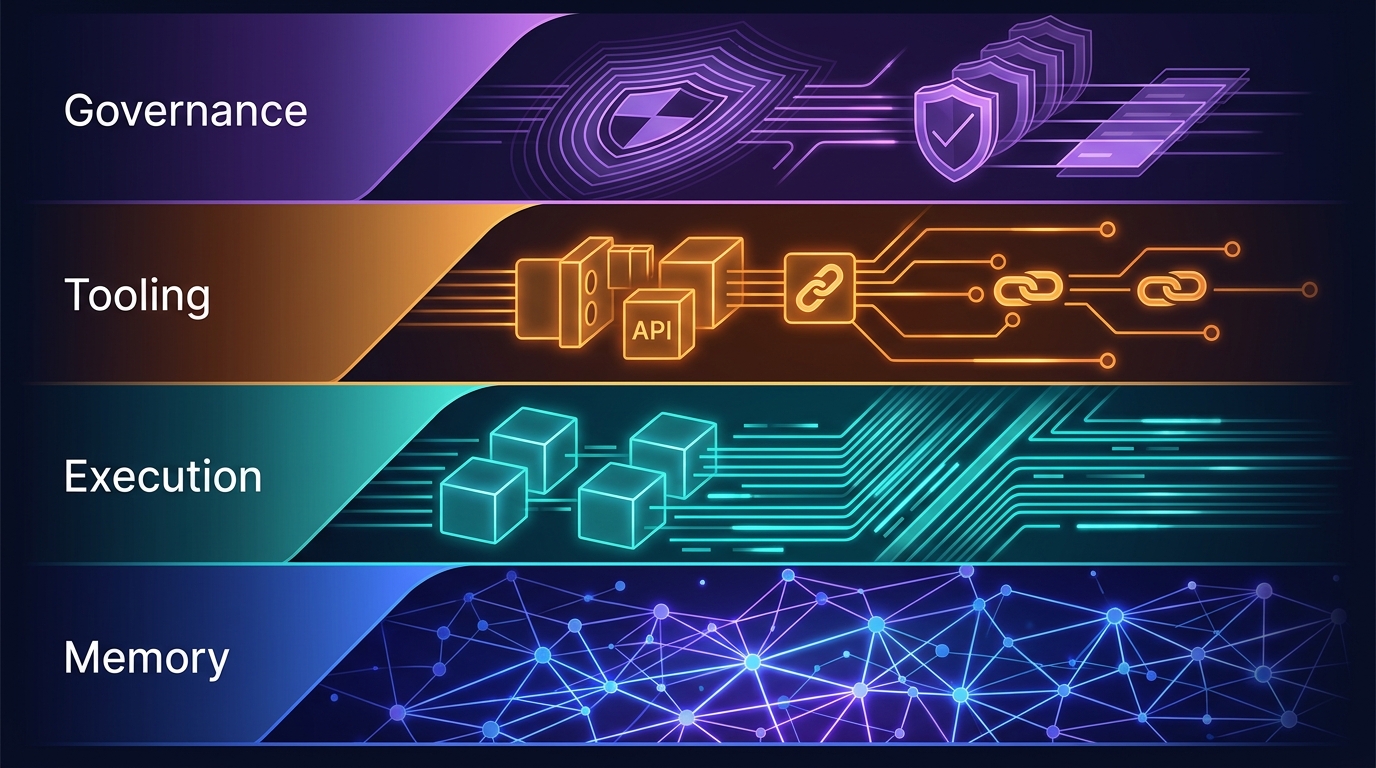
The Four-Layer Agent Infrastructure Stack: Where the Moat Actually Lives in 2026
A generation of agent startups will get commoditized. The ones that survive own one of four stateful layers: Memory, Execution, Tooling, or Governance. Here's how to tell the difference between a moat and glue code.