The long reads, grouped by what they answer.
Guides, tutorials and reference material for building and running AI agents, from the fundamentals to production.
Comprehensive guides
In-depth resources covering complete topics from start to finish.

AI agent frameworks 2026: LangGraph, CrewAI, OpenAI, Claude
The OpenAI Agents SDK, Claude Agent SDK, LangGraph, CrewAI, AutoGen and Google ADK: how each works, where each fits, and how to choose one.

Model Context Protocol (MCP): Agent Builder's Guide
How MCP standardizes tool and context access for AI agents with code examples, architecture patterns, production lessons, and security.

Google AI Tools 2026: Stitch, Opal, Gemini & More
Google's AI toolkit in 2026: Stitch (UI design), Opal (apps), NotebookLM, Gemini Canvas, and more. Features, pricing, and use cases.
Production and deployment
Best practices for deploying and scaling AI agents in production.

OpenAI Agents SDK: Deep Dive for Production Agent Builders
Hands-on deep dive into OpenAI Agents SDK architecture: agents, handoffs, guardrails, sandbox execution, and production patterns.

Multi-Agent Orchestration Infrastructure: Lessons from Production
Multi-agent systems are harder to operate than single agents by roughly the order of their agent count. Hard-won lessons from production deployments — coordination, state, cost, and failure handling.

Agent Infrastructure: What's Different from LLM Serving
Serving agents isn't the same as serving LLMs. Different concurrency models, different observability, different failure modes. A tour of what production agent infrastructure actually looks like.

Model Evals in Production: Regression Testing Prompts
If you ship prompt changes without regression tests, you're flying blind. A practical guide to building eval pipelines that catch quality regressions before users do.

Hybrid Search in Production: BM25 + Dense Retrieval
BM25 + dense retrieval outperforms either alone. Production-ready hybrid search with postgres, reranking, and when to use each approach.

Speculative Decoding for Production LLMs
Speculative decoding uses a small 'draft' model to propose multiple tokens that a larger model verifies in parallel, cutting inference latency 2–3x. A practical guide to production deployment.

Self-Hosting Llama 3: A Production Deployment Guide
Running Llama 3 in production takes more than docker run. A complete guide: weight distribution, quantization, serving topology, autoscaling, evals, and cost comparisons vs the major API providers.
Reference and glossary
Quick-reference resources for terminology and concepts.

More guides
Further guides and tutorials for AI agent development.
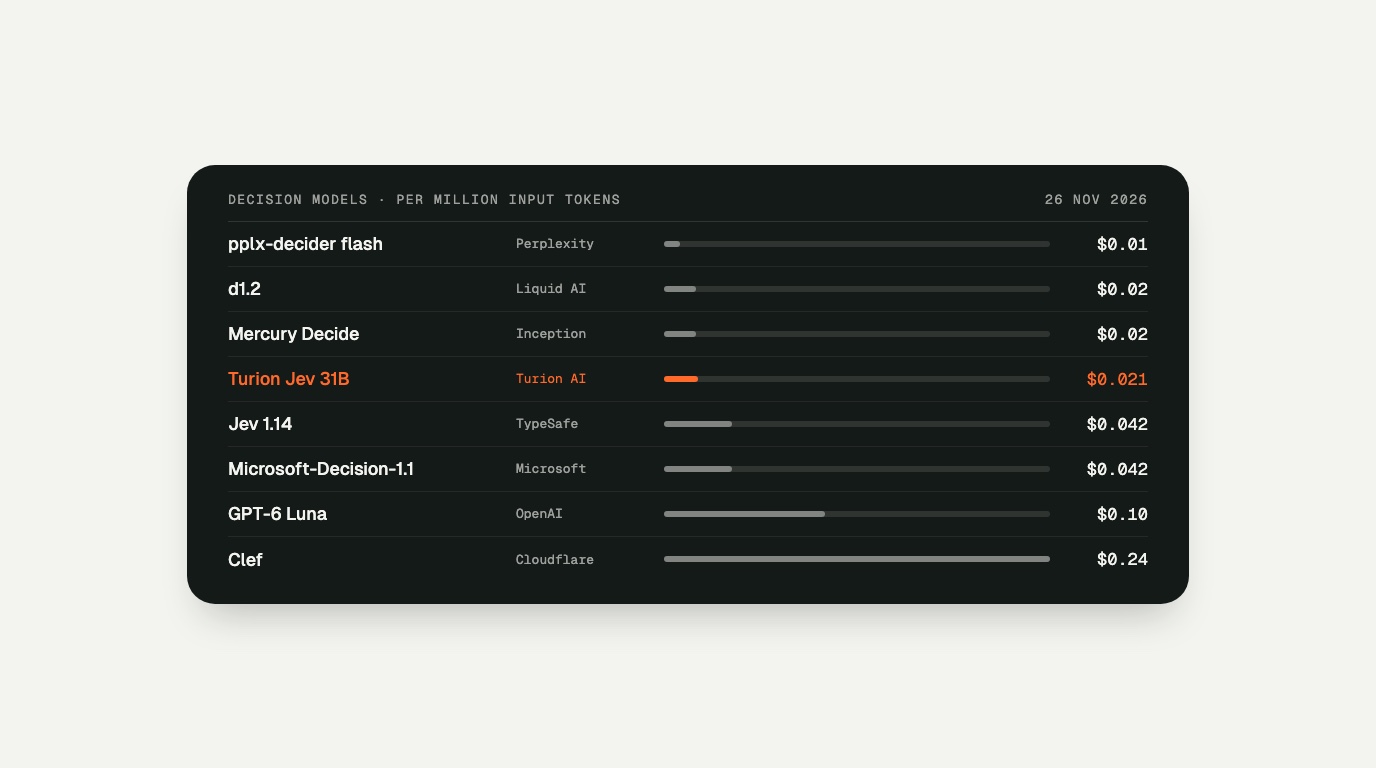
Decision model providers compared: prices, weights and scores
TypeSafe, Microsoft, Cloudflare, Liquid AI, OpenAI, Perplexity, Parallel, Inception, Baseten, Upstage and turion each host a decision model. What each charges per million input tokens on 26 November 2026, which have open weights, which share TypeSafe's API, and where they stand on the Decision Index.
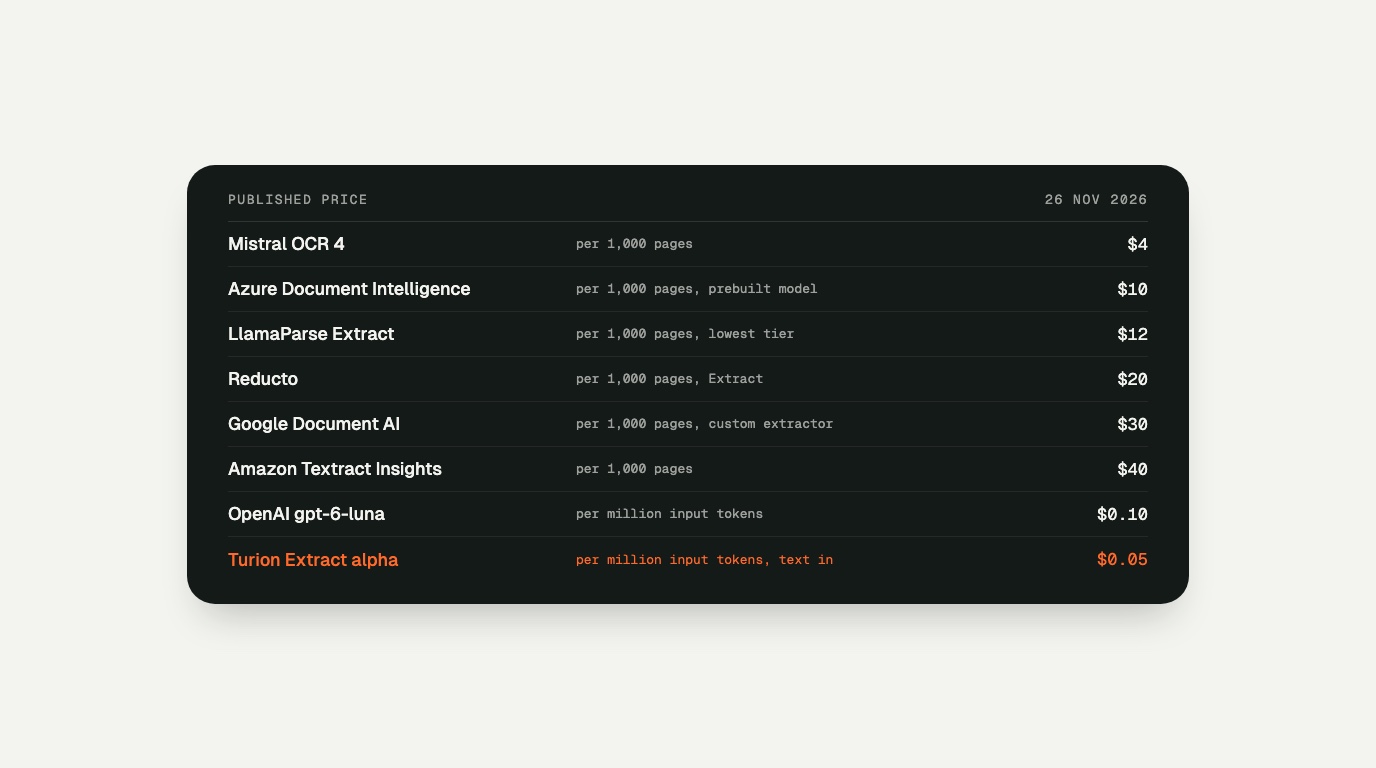
Document extraction APIs compared: prices and what each returns
Reducto, Extend, LlamaParse, Azure, Google Document AI, Amazon Textract, LandingAI, Mistral OCR, NuExtract, OpenAI structured outputs and Turion Extract: what each charges on 26 November 2026, whether it reads scans, and whether a field comes back with a confidence and a place in the document.
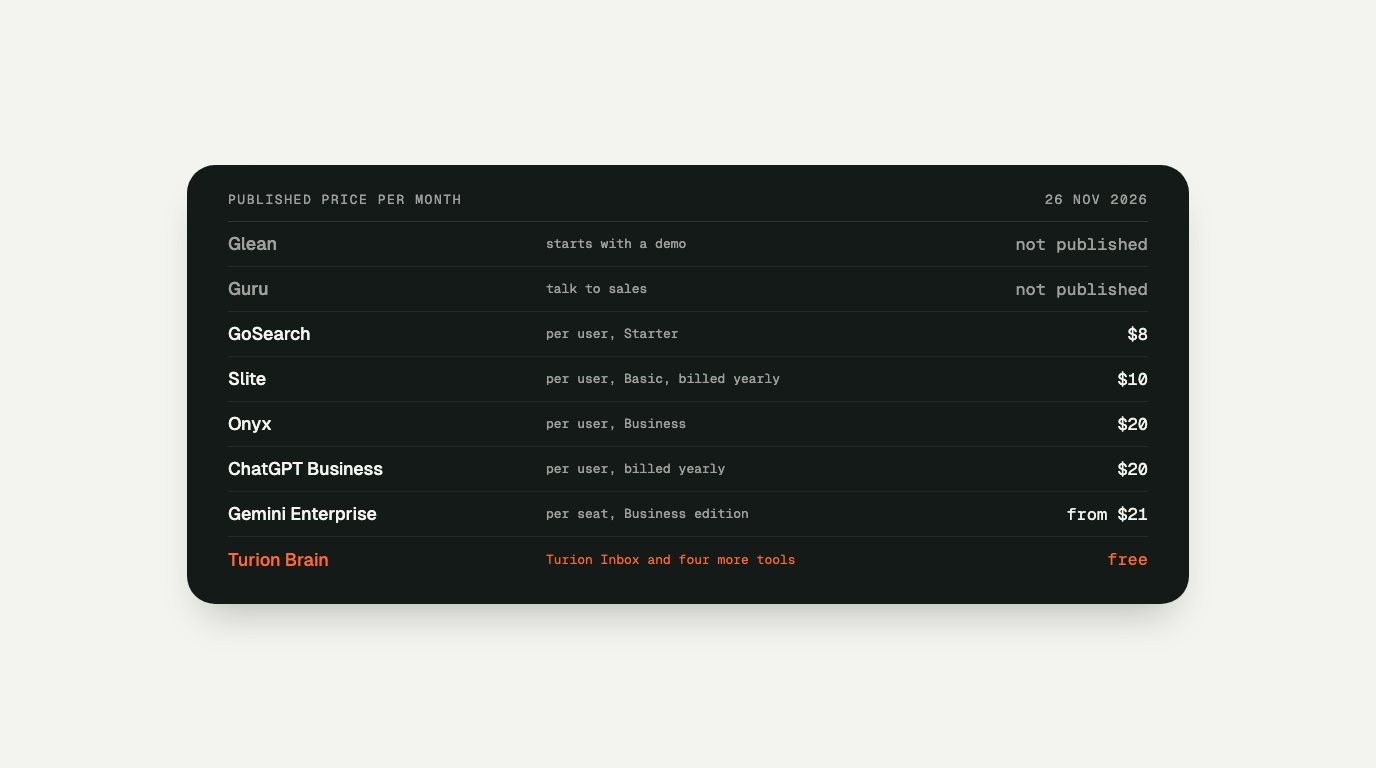
Glean alternatives for a small company
Glean does not publish a price and starts with a demo. What else gives a company of 10 to 200 people one place to ask across its tools: each vendor's published price on 26 November 2026, what you can host yourself, and which ones Claude and ChatGPT can read.
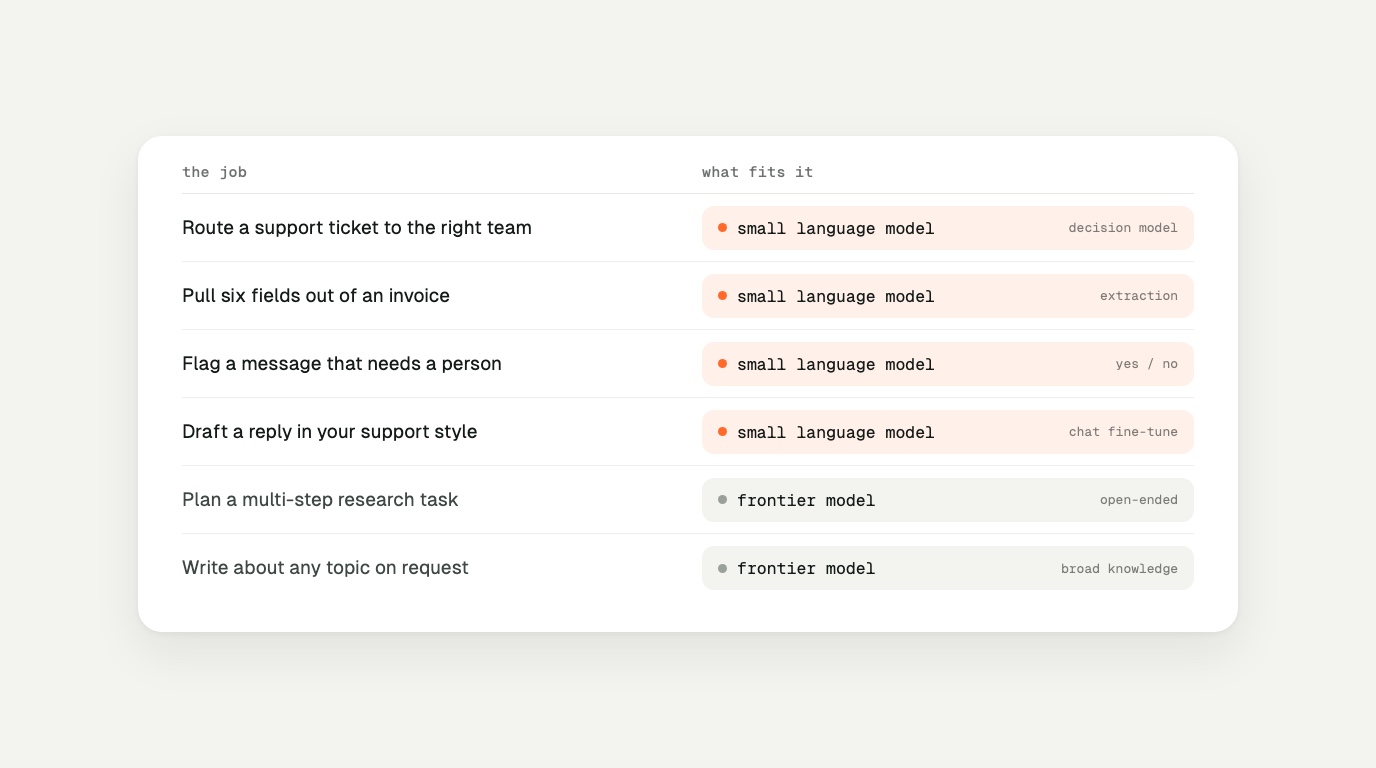
Small language models: when they beat a frontier model, and how to train one
A small language model is an open model of up to about 15 billion parameters that runs on one GPU. When one trained on your own examples beats a frontier model, when it doesn't, how to pick a base, and how to train and serve one.
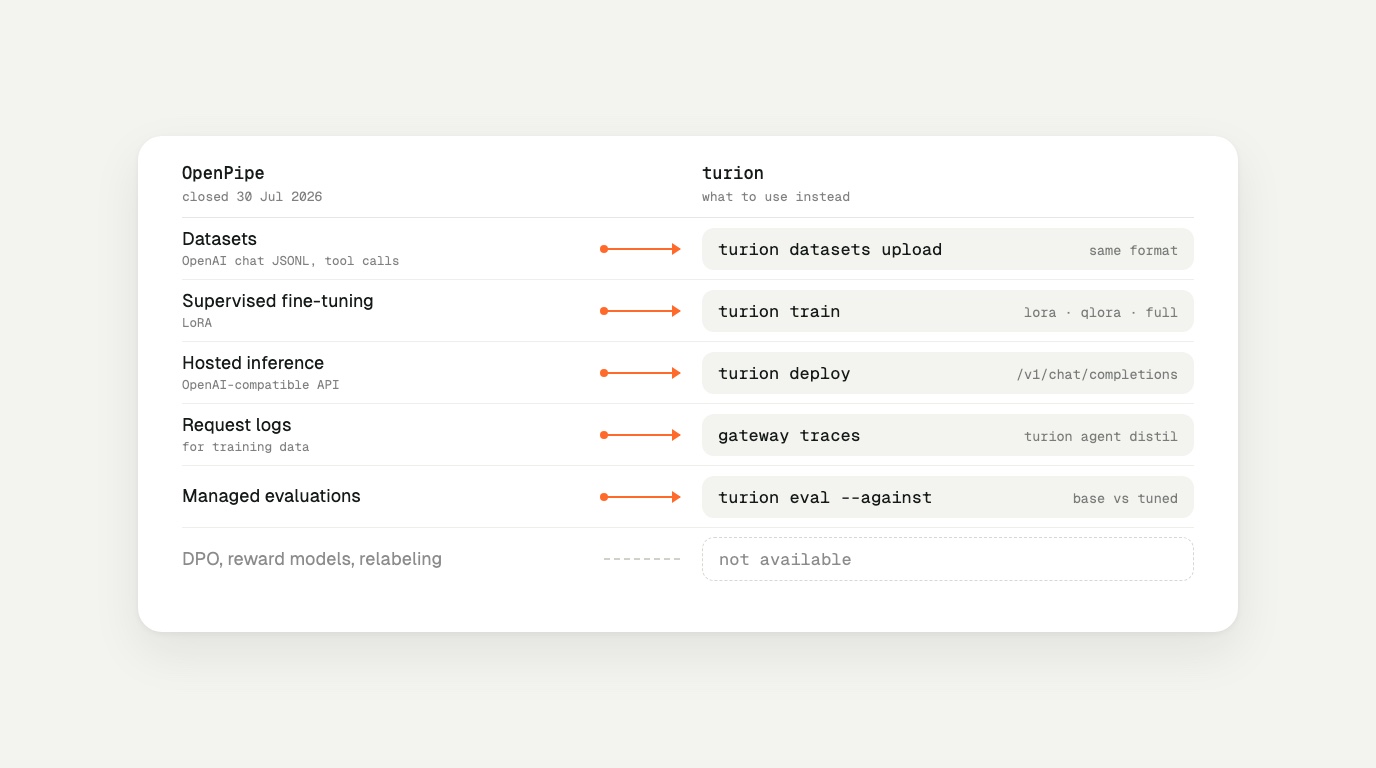
Moving your fine-tuned models off OpenPipe
OpenPipe stopped training and serving models on 30 July 2026, and Predibase is now part of Rubrik. What changed, what the official migration gives you, and how to retrain and serve the same models on turion from the JSONL you already have.
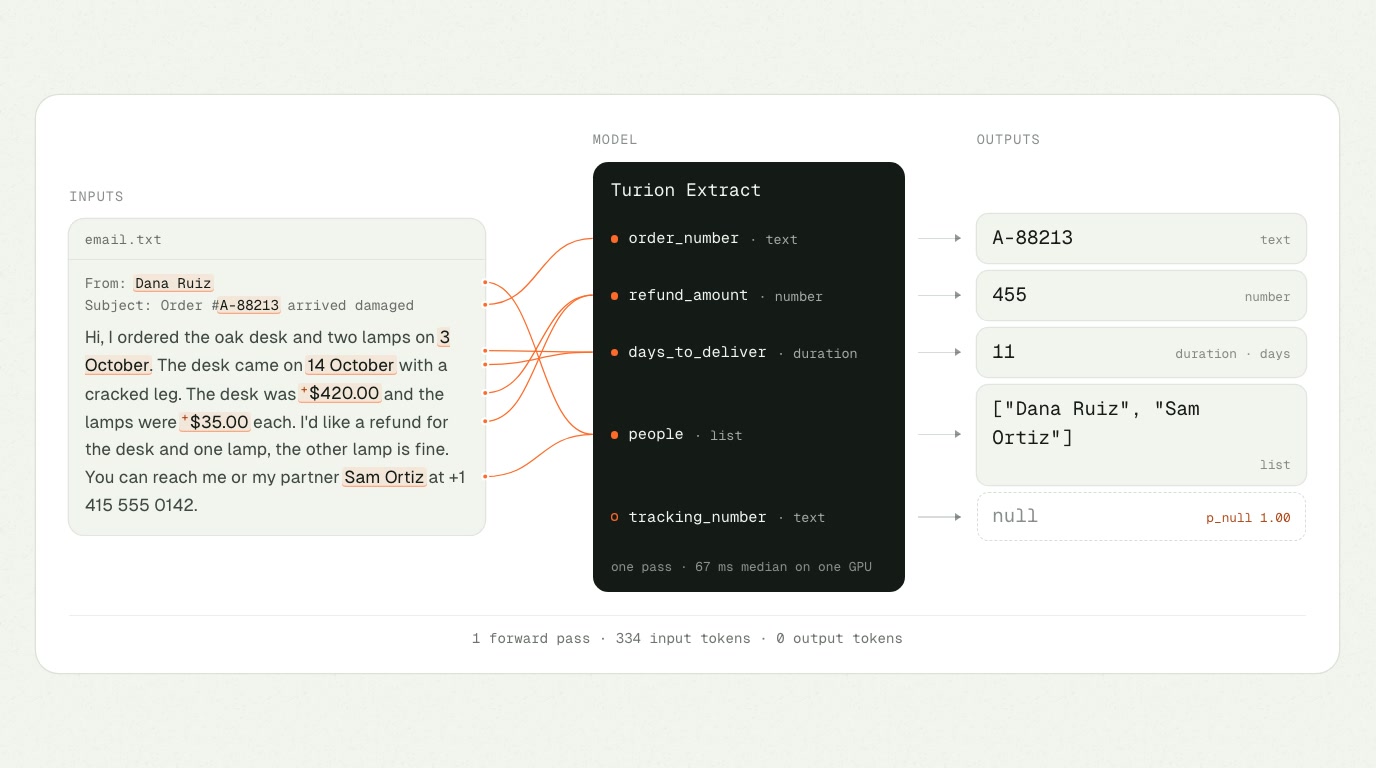
Turion Extract: an open SystemOne Extract model
We have built Turion Extract, an open SystemOne Extract model. It reads a document and fills in every field you ask for in a single pass, without writing a word. It scores 75.30 on the SystemOne Extract Index, ahead of Cloudflare's Clairic at 69.49, and you can call it on Turion today or download it under Apache-2.0.
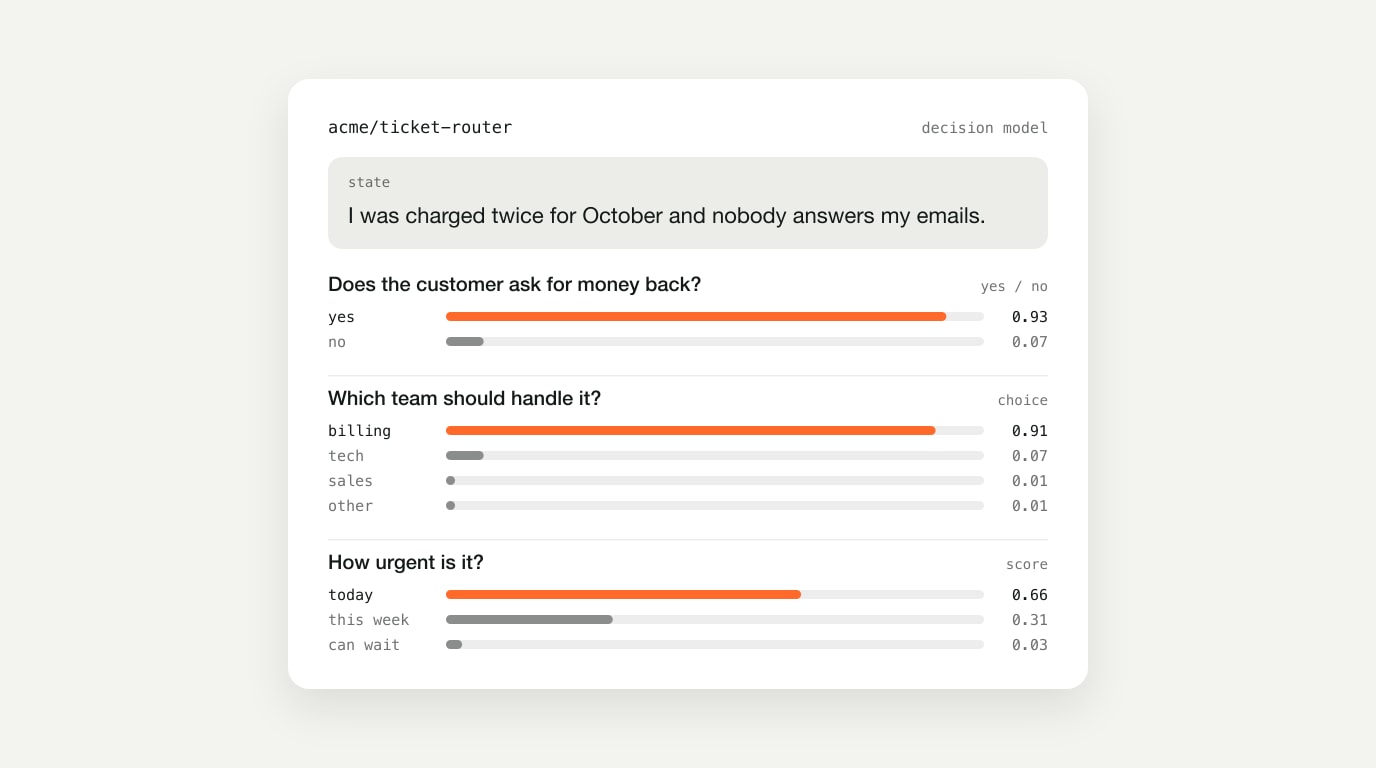
Decision models: what they are, how they work, and how to train one
A decision model reads a ticket, a document or a record once and answers typed questions with a probability for every option. What they are, which ones you can call today, when to trust an answer, and how to train one on your own examples.

Google AI Studio free tier: free models and rate limits
Gemini's free tier has per-model RPM/RPD limits, shown per project inside AI Studio. Which Gemini models are free, and what paid API use costs.

State of AI Infrastructure 2026: Mid-Year Reality Check
A mid-2026 ground-truth report: B200 reality, SGLang's $400M spinout, agent infra going mainstream, and the three patterns dominating production.

Building an AI Platform Team: Roles, Tools, and Rituals
AI platform engineering is a distinct discipline from ML ops and generic platform engineering. A practical guide to scoping, staffing, and operating an AI platform team — from first hire to org-wide enablement.

GPU FinOps: Reducing Your $10M AI Compute Bill
When GPU spend crosses $500k/month, informal cost discipline stops working. A FinOps playbook for large AI compute bills — attribution, commitments, workload placement, and the structural changes that matter.
Disaggregated Inference: 30–50% Throughput Wins
Prefill is compute-bound; decode is memory-bound. Disaggregating them across separate GPUs yields 30–50% throughput wins in production.
Context Engineering: Storage, Retrieval, and the New Memory Stack
Agents need more than a vector database. A tour of the memory stack production agents actually use — working, short-term, long-term, semantic, episodic — and the infrastructure behind each.

Inference at the Edge: Running LLMs on Consumer GPUs
Small models on laptops and phones went from a demo to a product category in 2025. The infrastructure patterns, runtimes, and deployment tradeoffs for edge LLM inference in 2026.
Running Sovereign AI: EU and India Infrastructure Playbooks
Data-sovereign AI is no longer optional in regulated jurisdictions. The practical playbooks for deploying inference and agent infrastructure inside EU and Indian data borders in 2026.
MI300X vs H100: AMD's Bet on Inference
AMD's MI300X turned from curiosity to production option during 2024–2025. Where AMD wins, where NVIDIA still leads, and how to integrate MI300X into a mixed fleet.
The AI Infrastructure Stack: 2026 Edition
A refreshed view of the production AI stack at the start of 2026 — what changed since 2024, what's consolidating, and where the next round of innovation is landing.
NVIDIA B200 vs H100: Should You Upgrade?
Blackwell's B200 is shipping at scale. Benchmarks, cost deltas, FP4 economics, and when it's worth the capex vs sticking with your H100 fleet for another year.
LoRA, QLoRA, and PEFT: The Fine-Tuning Infrastructure Guide
Parameter-efficient fine-tuning makes custom models affordable. A deep dive on LoRA, QLoRA, and DoRA — hardware sizing, training recipes, and the serving side most guides ignore.

Securing RAG Pipelines: Prompt Injection via Data
Classic prompt injection targets the user input. Indirect prompt injection — through retrieved documents, scraped content, or tool output — is the bigger threat for RAG. How to defend.
Ray vs Kubernetes for model serving: when to use each
Ray Serve and Kubernetes overlap for model serving but make different trade-offs. When Ray pays off, when plain Kubernetes is enough, and how to run both.
AI FinOps: Tracking Token Spend Across Your Org
LLM bills grew from invisible to huge in the span of a year. A complete FinOps playbook for AI workloads: attribution, budgets, alerting, and the reports finance actually wants.
KV Cache Optimization Techniques for LLM Serving
KV cache dominates memory and cost in LLM serving. Paged, compressed, offloaded, and shared — serve 2–4x more concurrent requests.

LLM Gateway Patterns: LiteLLM, Portkey, and Kong AI
LiteLLM vs Portkey vs Kong AI Gateway — retries, fallback, cost attribution, and PII controls. When to use each in a production AI stack.
FP8 and Quantization: Serving LLMs at Half the Cost
FP8 quantization on H100 doubles LLM inference throughput with minimal quality loss. Practical guide to FP8, AWQ, GPTQ, and when to use each.
pgvector at Scale: When Postgres Is Enough
pgvector gets faster every release and now handles workloads that used to require a dedicated vector database. When to stick with Postgres, when to graduate, and how to tune either way.
vLLM vs TGI vs Triton: LLM Inference Server Benchmarks
The three dominant LLM inference servers compared head-to-head on throughput, latency, features, and operational complexity. Benchmarks on H100, A100, and L40S — and which one to pick when.
Multi-Cloud GPU Strategy: Avoiding Lock-in and Saving 40%
Running GPU workloads on a single cloud leaves money and resilience on the table. A practical multi-cloud pattern for AI workloads — when it's worth the complexity and when it isn't.
The State of AI Infrastructure 2025
A ground-truth report on where AI infrastructure stands at the start of 2025 — GPU availability, inference pricing, the neocloud wars, and the architecture patterns winning in production.
Tracing LLM Applications with OpenTelemetry
OpenTelemetry's GenAI semantic conventions let you trace LLM applications with the same standards as the rest of your stack. A practical guide to instrumenting agents, tool calls, and retrieval with OTel.
GPU Cloud Comparison: CoreWeave, Runpod, Lambda
Neocloud GPUs undercut hyperscalers by 40–70%. Side-by-side on CoreWeave, Runpod, Lambda, Crusoe, and Fly.io — pricing, availability, and when to pick each.

PagedAttention Explained: How vLLM Achieves 24x Throughput
PagedAttention borrows OS virtual-memory ideas to fix the biggest efficiency problem in LLM serving: fragmented KV caches. Here's how it works and why it changed LLM inference.
Continuous Batching for LLMs: Why It Matters
Static batching leaves 50%+ of your GPU idle. Continuous batching at the iteration level closes the gap with 2–5x throughput wins.
Kubernetes for GPU Workloads: A Primer
Running AI workloads on Kubernetes isn't the same as running stateless microservices. A primer on GPU operators, device plugins, node affinity, MIG, and the patterns that keep clusters healthy.
Choosing a Vector Database in 2024: A Practical Guide
Pinecone, Qdrant, Weaviate, Milvus, pgvector, and the newer entrants — a working engineer's comparison across latency, recall, cost, and operational complexity. How to pick without regret.
NVIDIA H100 vs A100: Which GPU Should You Deploy?
A practical comparison of NVIDIA's H100 and A100 for LLM training and inference — memory, FLOPS, interconnect, price per token, and the cases where the older A100 still wins.
The AI Infrastructure Stack Explained (2024)
A grounded tour of the six layers that make modern AI systems work — from GPUs and inference servers to vector databases, orchestration, and observability — with the tradeoffs that matter in production.